
August 19, 2026 | Last Updated: September 18, 2026
On This Page
Clover Lawn vs. Grass Lawn Comparison Chart
| Factor | Micro-Clover Lawn | Traditional Grass Lawn |
|---|---|---|
| Mowing | Every three to four weeks in peak season | Weekly from spring through early fall |
| Summer water | Little once established | Regular irrigation to hold color through August |
| Winter look | Thins out and can look sparse from December to February | Stays green through our mild winters |
| Fertilizer | Fixes its own nitrogen from the air | Scheduled applications through the season |
| Weed control | Limited. Broadleaf herbicides kill clover along with the weeds | Full pre-emergent and post-emergent options |
| Foot traffic | Fine for kids and pets, not for a sports lawn | Handles heavy and repeated traffic |
| Reseeding | A light overseed every three to five years | Overseed thin spots as needed |
| Pollinators | Flowering blends feed bees. Micro-clover blends do not bloom | Minimal pollinator value |
| Soil benefit | Taproot loosens compacted clay over time | Shallow roots, benefits from annual aeration |
| Footing when wet | Can get slippery | Stable traction |
The chart above compares the two on their own. In practice, most of our clover installs are a blend of the two, which is covered below.
Why Clover Lawns Are Popular in the PNW
From October through June, we get rain, mild temperatures, and conditions that cool-season grasses love. Then July and August bring weeks with almost no measurable rain, and the same lawn that looked like a golf course in May turns straw-colored by the first week of August unless somebody is watering it. That makes homeowners start wondering whether the grass is worth it. Clover is the most common alternative they land on.
How Clover and Grass Handle PNW Summer Drought
Most lawns in our region are a blend of perennial ryegrass and fine fescues. Those grasses have shallow roots. When the soil dries out in midsummer, they go dormant, which is survival rather than death, but it doesn’t look great.
Clover roots deeper and pulls moisture from soil that grass roots never reach. An established clover lawn holds its color well into August on far less water.
However, clover still needs a light, consistent drink through the dry stretch to stay fully green.
The City of Bellingham runs a voluntary summer watering schedule from June 1 through September 30, and reports that lawn and landscape watering drives most of the jump in citywide drinking water demand during those months. So watering less in August does more than lower your bill.
How Clover and Grass Handle Wet Winters in Western Washington
Cool-season grass stays green through a Whatcom County winter. Clover does not, at least not with the same density. As light drops and temperatures fall, clover slows down, thins, and can look sparse or patchy from December into February. It will come back, but if you’re looking for a lush lawn in January, clover isn’t the play.
Soil chemistry compounds it. Decades of rain leach calcium out of our soils and push pH into the acidic range, and clover wants roughly the same neutral range grass does. Homeowners often assume clover is the plant that thrives in neglected soil, so this catches them off guard. Lime is part of the answer for a clover lawn the same way it is for a grass lawn, and it works better applied at proper coverage than dusted on.
WSU Extension puts the threshold plainly for our side of the state, noting that strongly acidic western Washington soils benefit from lime once pH drops below 5.5. That guidance was written for turf, and it applies to a clover lawn for the same reason.
The Weed Control Trade-Off of a Clover Lawn
Clover is a broadleaf plant. The herbicides that clear dandelion, creeping buttercup, and broadleaf plantain out of a lawn do not distinguish between those weeds and your clover, so they take out the lawn along with the problem.
Choosing a clover lawn means choosing a different maintenance approach. Weeds get handled through density, mowing height, and hand pulling instead of applications. A thick, established clover lawn shades out a fair amount of what would otherwise move in, which helps. But creeping buttercup is aggressive in our region, and it spreads by runner, so it can work its way into clover and stay there.
Weeding is something to keep in mind before you commit to a clover lawn. Some clients prefer that trade-off, since they didn’t want chemical applications on the property anyway. Others realize partway through that they wanted a clean, uniform lawn more than they wanted a low-input one.
Clover Lawns in Clay Soil, Shade, and Poor Drainage
Do Clover Lawns Grow Well in Whatcom County Clay Soil?
Much of Whatcom County’s soil is heavy clay. Clover handles it better than most cool-season grasses, and its taproots loosen compacted ground over several seasons. Grass in that same soil needs annual aeration to keep from suffocating.
If you want to know what you are working with before anyone quotes anything, WSU Whatcom County Extension maintains a list of local soil testing labs and can help you read the results.
Will Clover Grow in a Shady Yard?
Neither one solves a shade problem. Under mature firs and cedars, where light drops below four to six hours a day, clover struggles about as much as turf does.
Do Clover Lawns Fix Moss and Drainage Problems?
Moss shows up where soil is wet, acidic, compacted, and shaded, and it will outcompete clover on those sites just as readily as it outcompetes grass. Switching species does not fix standing water either. If your yard holds water after a hard rain, that is a grading and drainage conversation first.
Is Clover a Weed or a Lawn?
Technically both, though the difference is intent.
White clover that shows up uninvited in a grass lawn is a signal. It usually means the turf is thin and the soil is short on nitrogen, since clover pulls its own nitrogen from the air and can outcompete hungry grass. Treated as a symptom, it points to a fertilization and density problem.
A micro-clover lawn is a different thing. It is a small-leaf cultivar seeded evenly at the right rate into prepared soil, usually with a little perennial ryegrass to help it establish. The result is uniform rather than patchy, and the varieties used grow lower and denser than the volunteer clover in your neighbor’s yard. So the question is whether you put the clover in your yard on purpose.
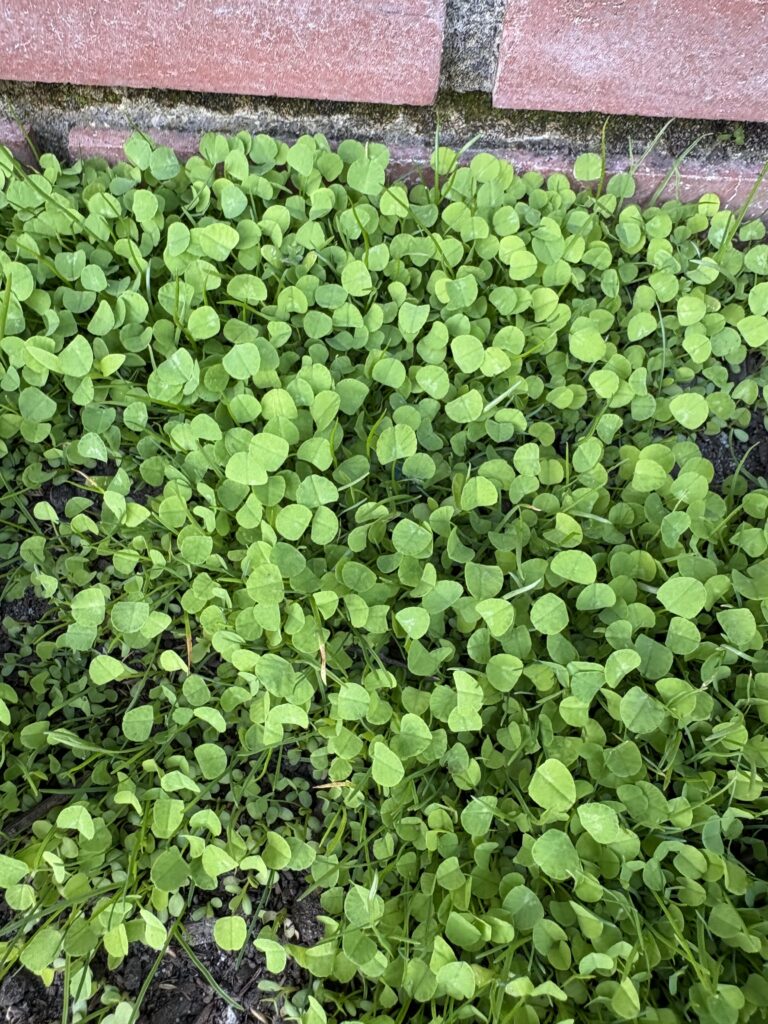
Micro-clover leaves compared with grass blades in a Pacific Northwest lawn
Why We Usually Recommend Overseeding Micro-Clover Into an Existing Lawn
This is the option we point most homeowners toward. Overseeding a small percentage of micro-clover into an existing lawn covers each plant’s weak season with the other’s strong one, and it does not ask you to give up the things a grass lawn is good at.
The clover feeds nitrogen back into the soil and holds color when the grass browns out in August. The grass keeps the lawn dense and green through the wet months when clover thins. You mow more often than you would with clover alone, though less than a pure grass lawn needs once the clover fills in.
Benefits of a Clover and Grass Blend
The seasonal trade is the obvious part. These are the reasons we steer people toward a blend even when winter looks are not their concern.
- Better traffic tolerance: Grass blades take the impact of heavy footsteps and pets better than soft clover stems.
- Winter cover: Clover thins out in the cold and can leave bare patches. Grass stays intact and holds the surface through the wet months.
- Erosion control: Grass has fibrous roots that hold topsoil together and clover has a deep taproot. Together they lock the soil in place, which matters on any slope in our rain.
- Fewer weeds: Grass fills the tight horizontal spaces between clover plants, leaving aggressive weeds nowhere to sprout. That matters more here than most places, since weed control options are limited once clover is in the lawn.
- Less mud and slipping: A pure clover stand gets slippery when wet. Grass gives you stable footing.
- Faster establishment: Turf grass sprouts quicker than clover, so you get a green surface to look at while the clover takes root underneath.
Micro-Clover vs. Flowering Clover Seed Blends
The micro-clover blend uses small-leaf varieties bred to stay low and dense, and it is designed not to flower. It includes perennial ryegrass to help the clover establish. We recommend this blend for households with allergy concerns, families who would rather not have bees underfoot where kids play barefoot, or anyone who wants the lawn to look more lawn-like.
The flowering blend feeds honeybees, bumblebees, and native pollinators through the season. Homeowners who want the yard to do something for the local ecosystem tend to choose this one.
The best blend for your property depends on your goals for the lawn and our assessment of your soil health, including:
- How many hours of sun the yard gets
- What the soil is doing
- How water moves across the grade
- Where the lawn meets beds and hardscape
- How your household uses the space
How Much Does a Clover Lawn Cost Compared to Grass?
What Influences the Install Price
- The size of your yard
- The condition of what’s already there
- How much soil work the site needs
- Whether irrigation is part of the project
- What seed blend you choose
A flat yard with decent soil and a lawn that can be easily removed costs less than a compacted, sloped, moss-covered one.
Ranked against the alternatives, a clover install typically costs less than sod and well below synthetic turf. It’s also fairly easy to replace it with regular grass if you change your mind down the line.
What It Costs Over Five Years
Clover Lawn
- Mowing: Roughly a third to a quarter as many visits during the growing season (compared to a grass lawn)
- Water: Little supplemental irrigation once established, against a grass lawn watered through June, July, August, and September
- Fertilizer: None, since clover pulls its own nitrogen from the air
- Weed control: No applications; hand-weeding instead
- Overseed: Budget for a light application every three to five years to keep the clover thick
Grass Lawn
- Lower cost to establish if you seed rather than sod
- A steady annual spend on mowing, irrigation, fertilization, weed control, aeration, and lime.
Clover tends to be more economical in the long run, even if it takes time to establish and you don’t see the budget benefit right away.
How to Decide Between a Blend, Pure Clover, and Grass
A blend is the right call for most yards, and especially if:
- You want less mowing and watering but still want a lawn that looks like a lawn in January
- The lawn takes regular foot traffic from kids, pets, or guests
- Any part of the yard slopes, where the two root systems together hold soil best
- You want the summer color without the bare patches
Pure clover is worth it if:
- You want the lowest-input lawn available, and winter looks are not a concern
- You would rather skip fertilizer and herbicide applications entirely
- Your yard gets at least four to six hours of sun
Stay with straight grass if:
- The lawn is a play surface that takes hard daily use
- You want to keep the option of a weed control program
- Your yard is deeply shaded, where a lawn of any kind is the wrong answer
What If I’m Just Sick of Mowing?
We can help! Robotic lawn mowing takes the Y out of DIY by automatically trimming your yard on a set daily schedule so it always has that just-mowed look. When you start a robotic mowing service with North County, we set up, program, and maintain your robot mower and come by periodically for the rest of your lawn care.
What to Expect From Clover Lawn Installation in Whatcom County
There Are Two Installation Windows
Spring, from April into early June, gives the lawn a full season to establish before its first summer.
Fall, from September into early October, takes advantage of mild wet weather and produces a thick lawn the following spring.
The Work Is Soil-First
Existing turf and roots come out, the soil is tested and amended, and the seed blend is matched to what the site assessment revealed. Grading, edging, and a first-season watering plan round out the install so the lawn establishes before it has to face a dry August.
Frequently Asked Questions
Is clover better than grass in the Pacific Northwest?
Usually a blend of the two. Clover outperforms grass through the dry July and August stretch, holding color on much less water and needing mowing only every three to four weeks. Grass outperforms clover from late fall through early spring, and it carries traffic and keeps footing stable year-round. Seeding them together is what we recommend for most Whatcom County yards.
Pure clover is the better choice if you want the lowest-input lawn you can get and you can live with it thinning in winter. Straight grass still wins if you want a uniform lawn every month of the year or the lawn takes hard daily use.
Does a clover lawn stay green through winter in Western Washington?
Not the way grass does. Clover slows down as light and temperatures drop, and an established clover lawn can look thin or patchy from roughly December through February in Whatcom County. It recovers on its own as things warm up in spring. If winter curb appeal matters to you, a blend of micro-clover and grass holds up better than clover alone.
Does every clover lawn attract bees?
No, and this is a choice you get to make. North County Landscape Co. carries a micro-clover blend bred not to flower, which keeps bee activity out of the lawn for households with allergy concerns or kids playing barefoot.
Our flowering blend is the opposite; it will bloom and feed honeybees, bumblebees, and native pollinators. Mowing height also matters on a flowering lawn, since cutting at three to four inches keeps blooming down.
The blend is selected during the on-site assessment, once we have seen the yard and talked through how you use it.
Can you mix clover and grass in the same lawn?
Yes, and it is a popular middle ground. Micro-clover is overseeded into an existing grass lawn at a low rate. The trade-off is that broadleaf weed control is off the table for the entire lawn once clover is part of it.
Do you have to stop using weed control on a clover lawn?
Broadleaf herbicides, yes. Clover is a broadleaf plant, so the products that treat dandelion, creeping buttercup, and plantain will damage or kill it. Weed management on a clover lawn shifts to keeping the stand thick, mowing at a height that lets it shade out competitors, and pulling by hand when something moves in. For homeowners who would rather not have chemical applications on their property, that is a benefit. For homeowners who want a spotless lawn, it is the biggest thing to weigh.
Is a clover lawn cheaper than a traditional lawn?
Upfront, clover typically costs less than sod and considerably less than synthetic turf, though the site prep drives most of the number on any of them. Where clover saves money is over time: no fertilizer program, far less water through the summer, and a fraction of the mowing. Against that, plan on a light overseed every three to five years to keep the stand thick. Pricing on any lawn install depends on yard size, the condition of what is there now, soil prep, and whether irrigation is part of the project.
Will clover work in a shady yard?
Not in deep shade. Clover needs roughly four to six hours of sun a day, similar to what most cool-season grasses need. Under mature firs and cedars, neither clover nor turf will fill in properly, and the yard is better served by shade-tolerant plantings, groundcover, or a mulched bed.
Will a clover lawn take over the rest of my yard?
It spreads by runners, so without a border it can creep into planting beds, gravel, and the edges of patios over time. Metal or concrete edging installed with the lawn handles this, and periodic edging along beds keeps it in bounds.
How does clover compare with a robotic mower for cutting down lawn work?
They solve different halves of the problem.
- A robotic mower removes the mowing labor from a grass lawn while leaving watering, fertilization, and weed control in place.
- A clover lawn reduces mowing, watering, and fertilizing at once, but changes how the lawn looks in winter and limits weed control.
If mowing is your only complaint and you like your grass, robotic mowing is the smaller change.
Share with your followers:
Get a Clover Lawn Assessment in Whatcom County
Ready to make the switch to clover? We’ll walk your property, talk it through, and tell you if clover is the right choice for your yard. Estimates are always free.
Recent Posts
What a Full Landscape Installation Costs in Whatcom County [2026 Pricing]
What Counts as a Full Landscape Installation A single-service install is one job: a sod lawn, or a paver patio, or an irrigation system. A full installation reshapes the whole yard, and the elements depend on each other. A full install usually includes some or all of the following: Grading and soil preparation Drainage, including…
How Much Does Synthetic Turf Cost in Whatcom County?
Synthetic Turf Cost by Yard Size Here is what a finished synthetic turf lawn typically costs at North County’s starting range of $15 to $19 per square foot. Quotes vary with site conditions, but this gives you a starting point for budgeting. Lawn Size Typical Dimensions Installed Cost Range What It Fits 200 sq. ft.…
How Much Does a Paver Patio Cost in Whatcom County?
Paver Patio Cost by Size Patio Size Dimensions Typical Range What It Fits 150 sq. ft. 10 x 15 ft. $5,500 to $12,000 Bistro table and two chairs, or a grill station 200 sq. ft. 10 x 20 ft. $7,000 to $15,000 Small dining set, or a pair of loungers 300 sq. ft. 15 x…