
Check Out Our Reviews in Whatcom County

We highly recommend North County Landscaping.


Furthermore, his crew was incredible to work with. My project manager, Paul, was on top of everything, always keeping me up to date on the project and addressing any questions I had. Luis and Cesar, the landscapers on my project, were knowledgeable, professional, highly skilled, and meticulous during demo and installation. They left the job site clean every day. I expected this project to take at least a couple of weeks. The crew completed the work beautifully in 7 business days. I couldn't be happier with the results. My only regret is not taking "before" pictures, as I can't believe this is my backyard now. I'm looking forward to summer so I can spend more time in my beautiful outdoor space.

The turf they installed in our front yard is high quality and a huge improvement over the dead lawn we used to have. It looks fantastic, feels soft underfoot, and is durable enough for both our kids and our dog to play on. Our whole family is already enjoying it every day.
The installation crew was equally impressive—friendly, courteous, professional, and thorough in cleaning up once the job was finished. We're really happy with the transformation and highly recommend North County Lawn Care to anyone considering turf installation.


I wish I had before photos to show because everywhere was overgrown, unkept, and messy! They did such a great job cleaning up every detail. We had an overwhelming amount of English ivy that had taken over the side of our deck, our rose bush, and most of our planter areas. Not only did they take it out, they left no trace of those pesky leaves! They did a wonderful job trimming all of our trees, hedges, and bushes! Thank you so much and getting rid of all the weeds! It feels like a totally brand new home! Thank you so much!!!


We had a crew (Luis, Juan, Jose Jr., Jose V, and Dylan) working on our landscaping for our new home in Semiahmoo. They listened to us when we gave them instructions, answered our questions, and seemed to care about doing a great job. After they completed their work, they did a great job cleaning up, too.
They are professional, courteous, thorough, and knowledgeable. These guys are a true asset to NCLC!


I should add that I hired North Country because of how well they maintain my neighbor's property and the great job they did on their patio project!


The day of: Kevin, Paul and his crew were on site; punctual and well prepared. I greatly appreciate Kevin's care and tentativeness to my questions.
Jose and his crew, (Jose, Jose and Alverto) did an amazing job with the landscaping. They worked hard and always checked in with us to see how we liked what was done so far.
We have a few more projects to go and feel absolutely comfortable going back to Kevin. He has earned our trust and business.


Thank you North County Lawn Care. Kevin, Paul, Jose and the whole crew were great to work with. I highly recommend!
Update: I managed to mow off a sprinkler head yesterday and Josue came right out this morning and fixed. Great service!

Steve & Renee

Furthermore, on the morning the project was to get underway, I requested a change to the initial layout, a companies worst nightmare, but not for NCLC. Paul, not batting an eye, graciously listened to my idea, and made the changes happen without hesitation. Thanks to his patience and keen eye for design, he helped make my gazebo take center stage, creating a beautiful focal point for my yard.
I would be remiss not to mention the hard work and professionalism of Jose Luis and Adalberto, the magnificent duo that moved yards of gravel, soil and bark and laid the most beautiful patio pavers. These guys worked so hard morning till evening to ensure that the job got completed timely and with customer satisfaction. They were a joy to have around and I can’t thank them enough for all the effort they put forth.
To say that I would highly recommend NCLC is an understatement, they are absolutely the best business in Whatcom county. No job is too big, or too small. Even if you’re on a budget, these guys will do their best to make your dreams come true. I am already anxious to hire them to start Phase 2 of my backyard renovations. A heartfelt thanks to Kevin, Paul, Jose Luis and Adalberto. You guys are the best!!!


What Is Artificial Turf?
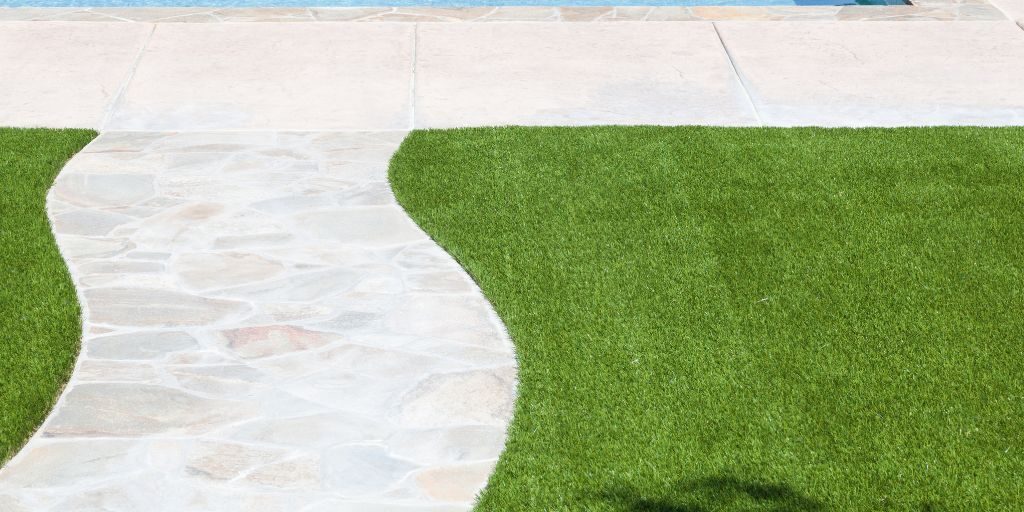
Artificial turf is a series of thousands of synthetic fibers made to look and feel like real sod, without any of the fuss. Sports teams often use it for athletic fields, but it’s also a great choice for having a beautiful green lawn all year long.
Even more, the fake-looking artificial turf you may have seen on football fields is a thing of the past. Synthetic grass is more realistic than ever, with blades that replicate how real grass moves and feels.

Our Services
Get artificial turf installation from your local experts.
All-Purpose
A multipurpose artificial grass that works well for high-traffic areas on your lawn.
Summer Blend
This blend stays cool and withstands the wear and tear from kids spending hours outside. It has a blend of green and brown thatch for a natural appearance.
Plush
Great for high-visibility areas that don’t see a lot of foot traffic, such as gardens and front lawns.
Pet
Featuring Quad-Flow permeable backing for proper drainage and antimicrobial fibers, our pet turf is snap to clean up.
Putting Green
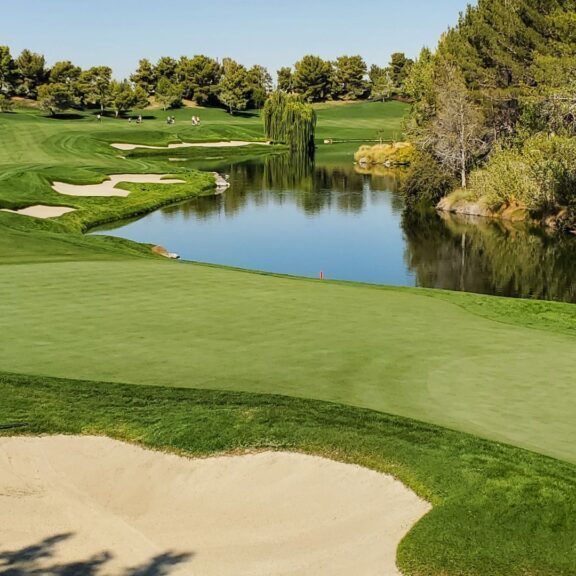
Practice your putting game at home! We’ll set up professional putting green designed for your lawn.


How to Get Started
Your Representative
Meet Ben Silva
Sales & Estimating Specialist
Joining our team in 2022 as Sales & Estimating Specialist, Ben has a wealth of experience and expertise. With a background in Synthetic Turf, Ben is well-versed in understanding and meeting clients’ specific needs, offering tailored landscaping solutions that make perfect sense. He excels in identifying the unique requirements for each site and providing comprehensive solutions that encompass lawn care, landscape maintenance, and specialized projects such as synthetic turf installations. Ben is dedicated to building strong relationships, listening attentively to clients’ needs, and delivering accurate estimates that align with their budgets and expectations.
Learn More »
Request a Free Estimate
Artificial Turf Installation in Whatcom County
Skagit County
Synthetic Lawn, Landscape & Hardscape Services
Don't see your area listed? No problem!
Call 360-510-6890 to learn whether your location is within our reach.
Why Choose Artificial Grass?
Check Out Our Portfolio
Frequently Asked Questions
Great question—synthetic turf and artificial grass refer to the same product. At North County, we often use the term synthetic turf to reflect the advanced, natural-looking quality of the materials we install. Unlike the old turf you might remember from sports fields, today’s synthetic turf is soft, realistic, and designed to mimic real grass in both look and feel.
Most synthetic turf installations last between 15 to 20 years, depending on the product and how much foot traffic it receives. With proper installation and occasional light maintenance, your turf can stay green and beautiful for well over a decade.
Yes! We offer pet-friendly turf options that feature antimicrobial fibers and fast-draining backing to make cleanup easy and hygienic. Our turf is free from harmful chemicals and provides a soft, cushioned surface that’s great for kids and pets alike.
Maintenance is minimal. You may want to rinse your turf with a hose occasionally to remove dust, pollen, or pet waste. For high-traffic areas, brushing the blades once in a while can help keep them standing upright and looking fresh. No mowing, fertilizing, or watering needed.
Resources
What a Full Landscape Installation Costs in Whatcom County [2026 Pricing]
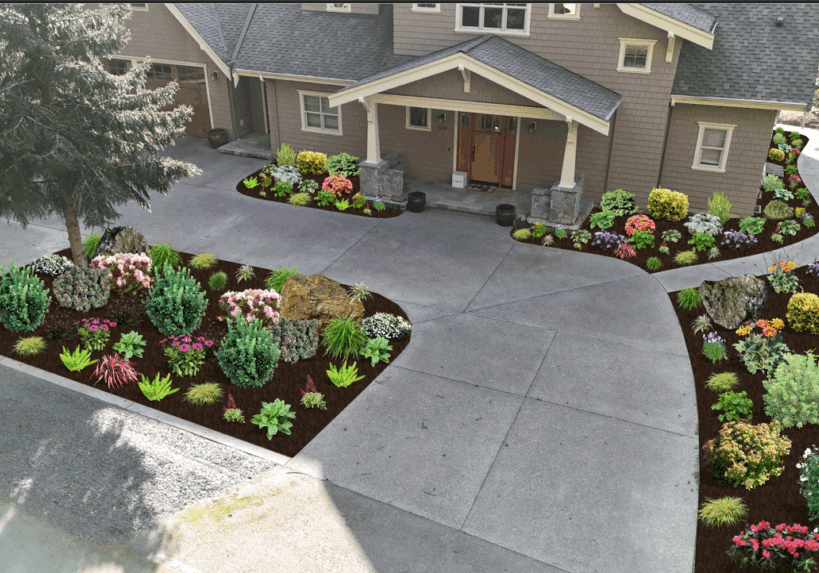
What Counts as a Full Landscape Installation A single-service install is one job: a sod lawn, or a paver patio, or an irrigation system. A full installation reshapes the whole yard, and the elements depend on each other. A full install usually includes some or all of the following: Grading and soil preparation Drainage, including…
How Much Does Synthetic Turf Cost in Whatcom County?
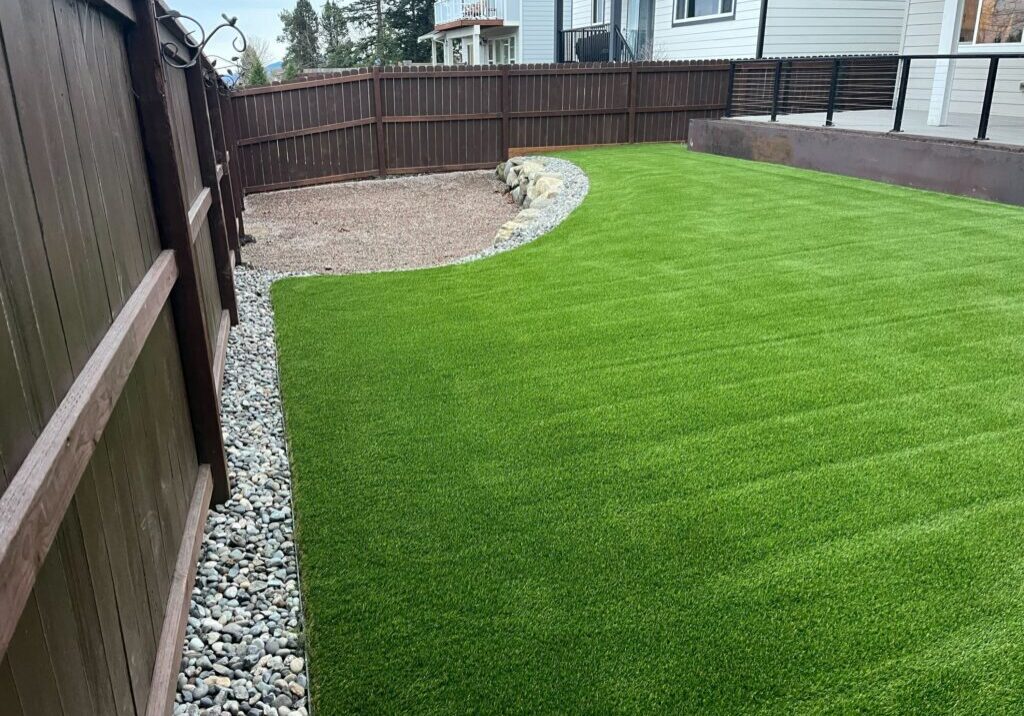
Synthetic Turf Cost by Yard Size Here is what a finished synthetic turf lawn typically costs at North County’s starting range of $15 to $19 per square foot. Quotes vary with site conditions, but this gives you a starting point for budgeting. Lawn Size Typical Dimensions Installed Cost Range What It Fits 200 sq. ft.…
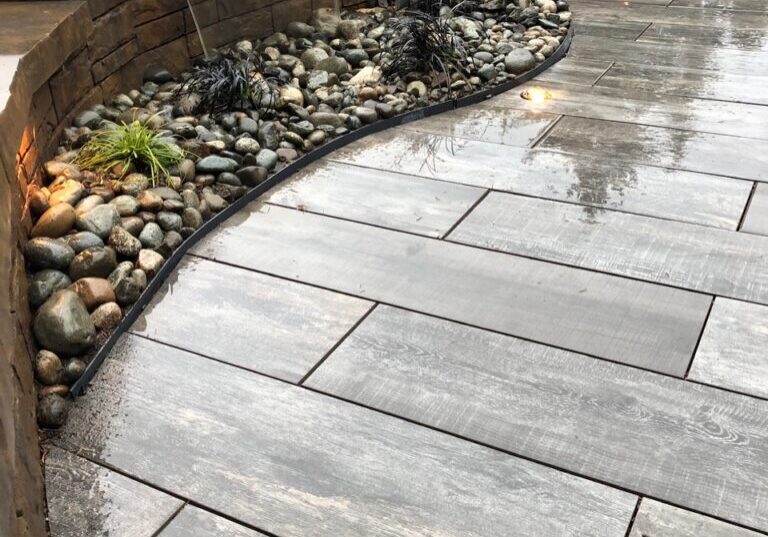
How Much Does a Paver Patio Cost in Whatcom County?
Paver Patio Cost by Size Patio Size Dimensions Typical Range What It Fits 150 sq. ft. 10 x 15 ft. $5,500 to $12,000 Bistro table and two chairs, or a grill station 200 sq. ft. 10 x 20 ft. $7,000 to $15,000 Small dining set, or a pair of loungers 300 sq. ft. 15 x…
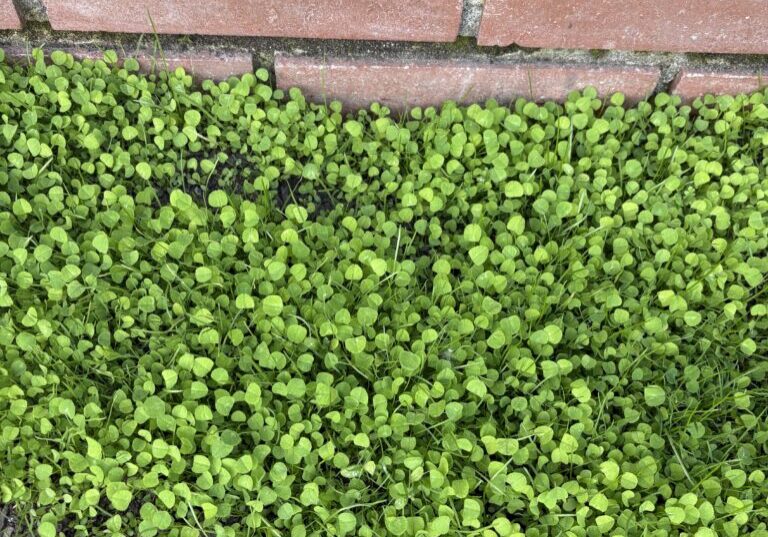
Clover Lawns vs. Traditional Grass: Which Works Better in the Pacific Northwest?
Clover Lawn vs. Grass Lawn Comparison Chart Factor Micro-Clover Lawn Traditional Grass Lawn Mowing Every three to four weeks in peak season Weekly from spring through early fall Summer water Little once established Regular irrigation to hold color through August Winter look Thins out and can look sparse from December to February Stays green through…
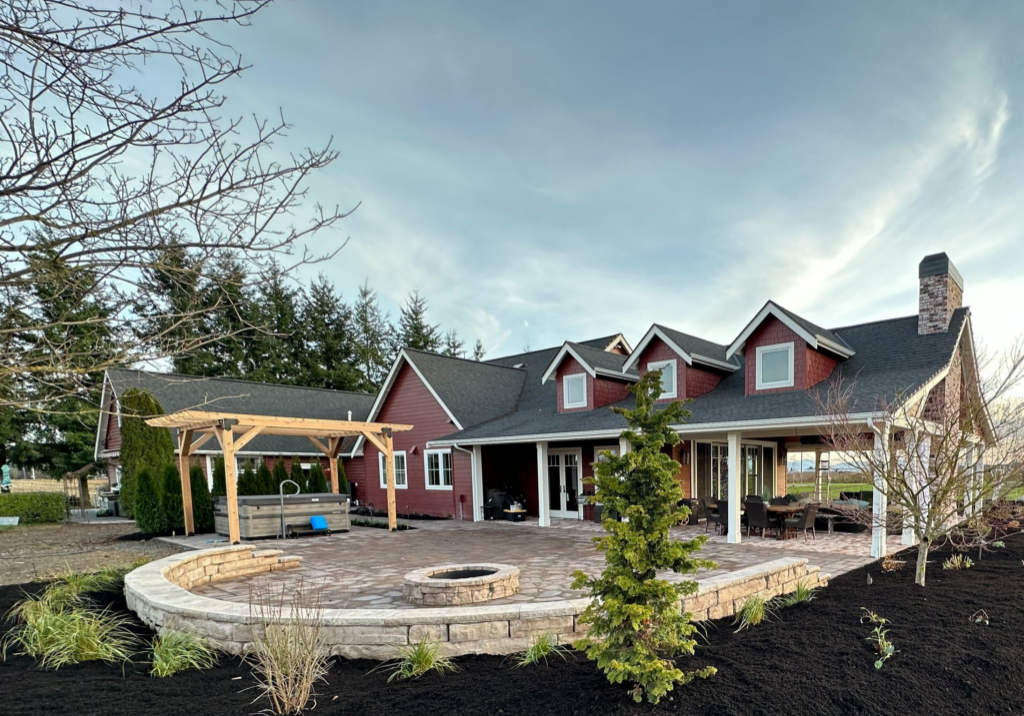
Fire Pits, Water Features, & Rock Gardens: How to Add Year-Round Interest to Your Backyard
Designing for Four Seasons in the PNW Year-round landscape design comes down to layering features that catch your attention at different times: Something with structure to add interest during the winter Something that pulls you outside on cool evenings, and Something that moves and makes sound when the garden is still. Stone, fire, and water…
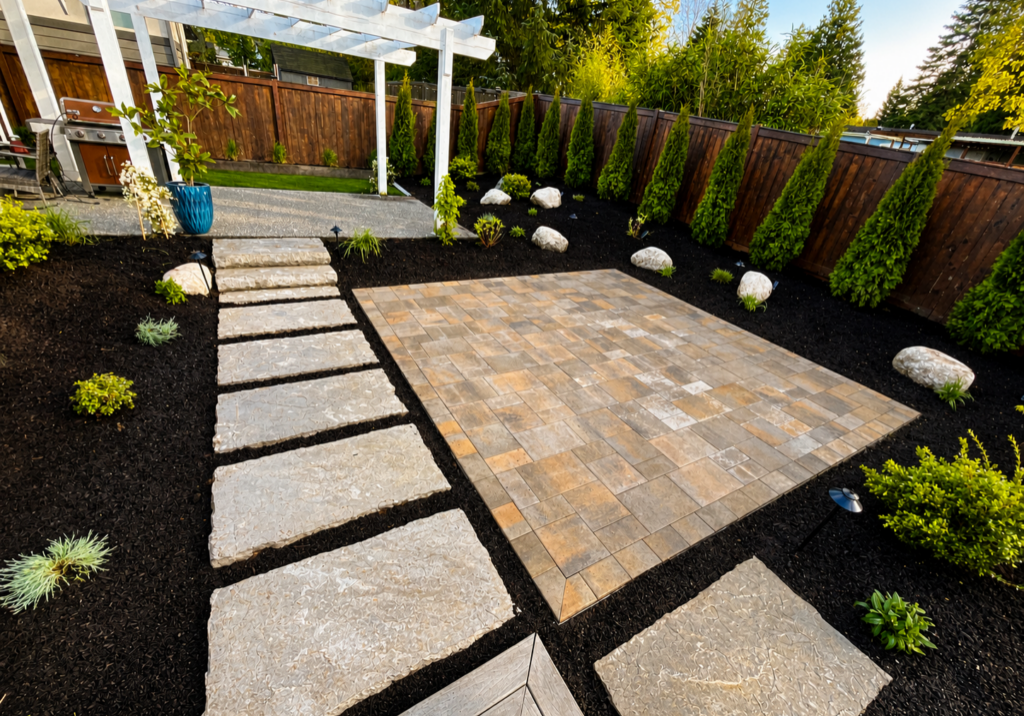
Hardscape Ideas and Inspiration: Patios, Walkways, & More
Search “backyard patio” and you’ll scroll through a million gorgeous photos. Most were shot somewhere sunny and dry, which is why a lot of those ideas don’t survive their first Whatcom County winter. Your hardscape can look every bit as good as anything you’ve saved, as long as it’s designed for our soil, our slopes,…
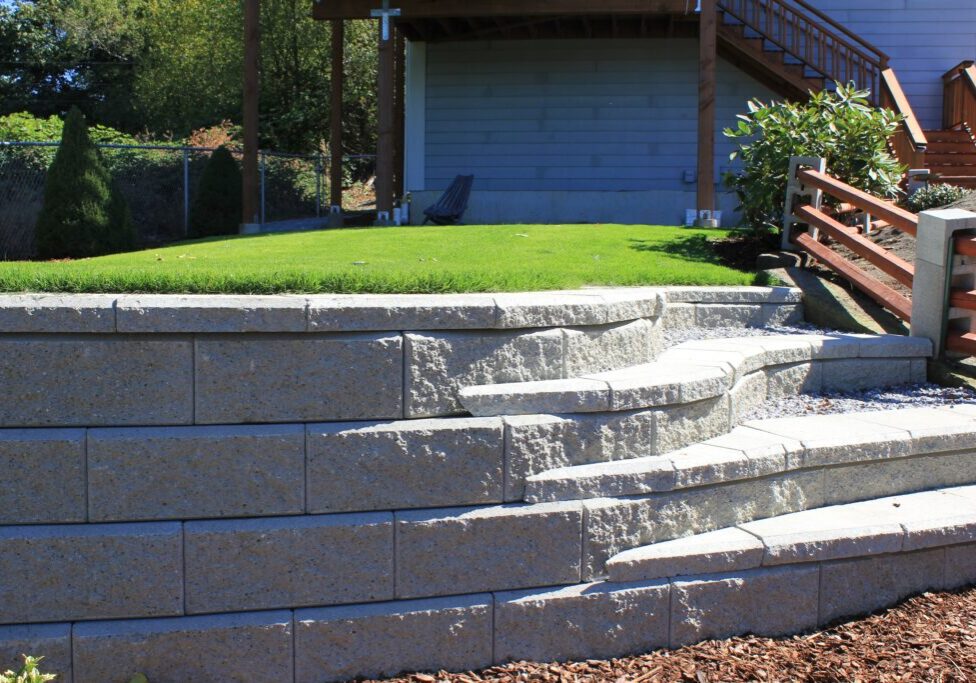
Retaining Walls vs. French Drains: How to Tell Which One Your Yard Needs
When you’re standing in your backyard after a heavy rain, watching water collect against the back of the house, or noticing a slope that shifts after every wet winter, you’re probably wondering how to solve it.
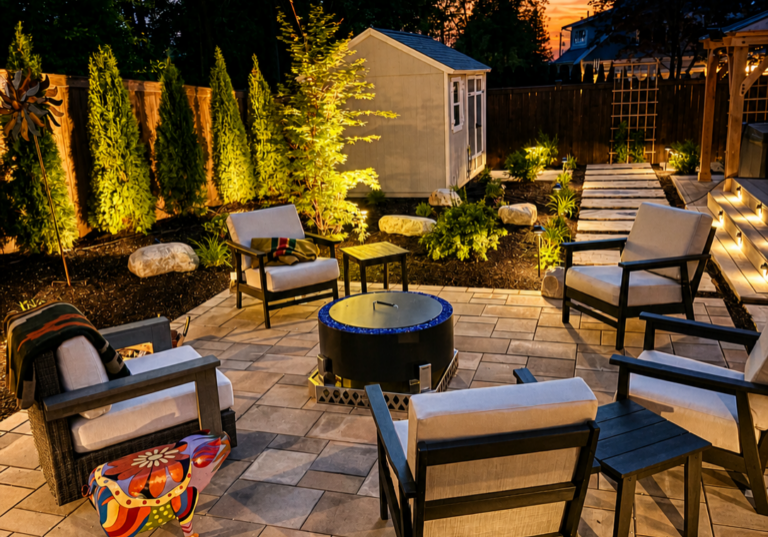
Low-Voltage Landscape Lighting: A Homeowner’s Guide to Planning Your System
For homeowners weighing how to light a yard, low-voltage systems are the most common path. They’re safe to install, flexible to design around, and well-suited to the conditions in Whatcom County and the rest of the Pacific Northwest. This guide walks through how the systems work, how they compare to alternatives, what drives the cost,…
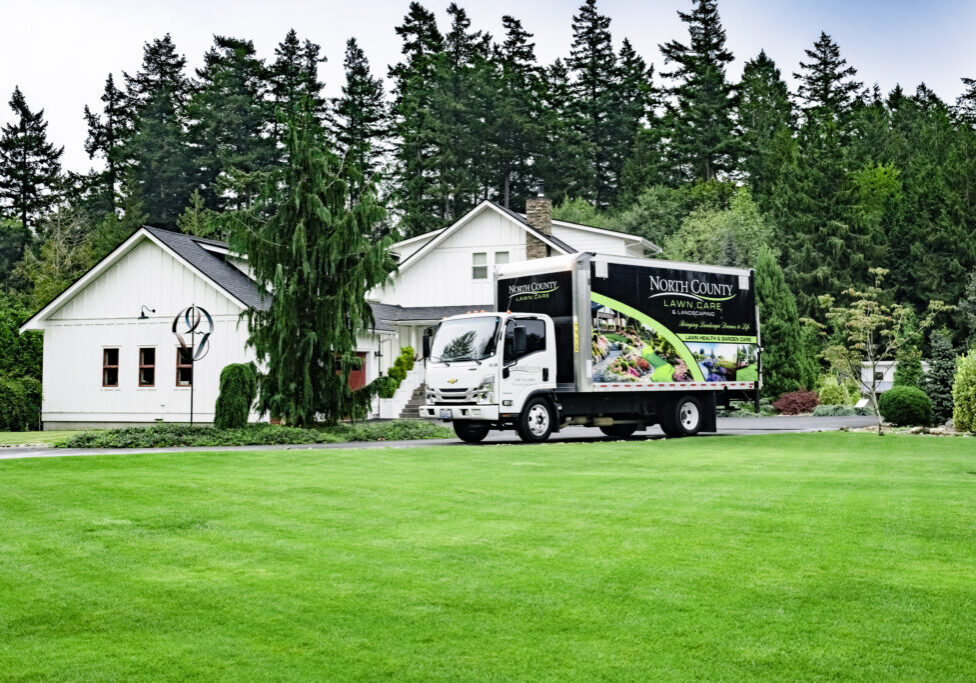
Lawn Health Programs Explained: Fertilization, Weed Control, and Soil Nutrition
If your lawn in Whatcom County has ever looked thin, yellowed, or overrun with moss despite regular watering and mowing, the problem might be what’s happening under the surface. A lawn health program is a scheduled series of treatments designed to address the root causes of poor turf: nutrient deficiencies, soil imbalances, persistent weeds, and…
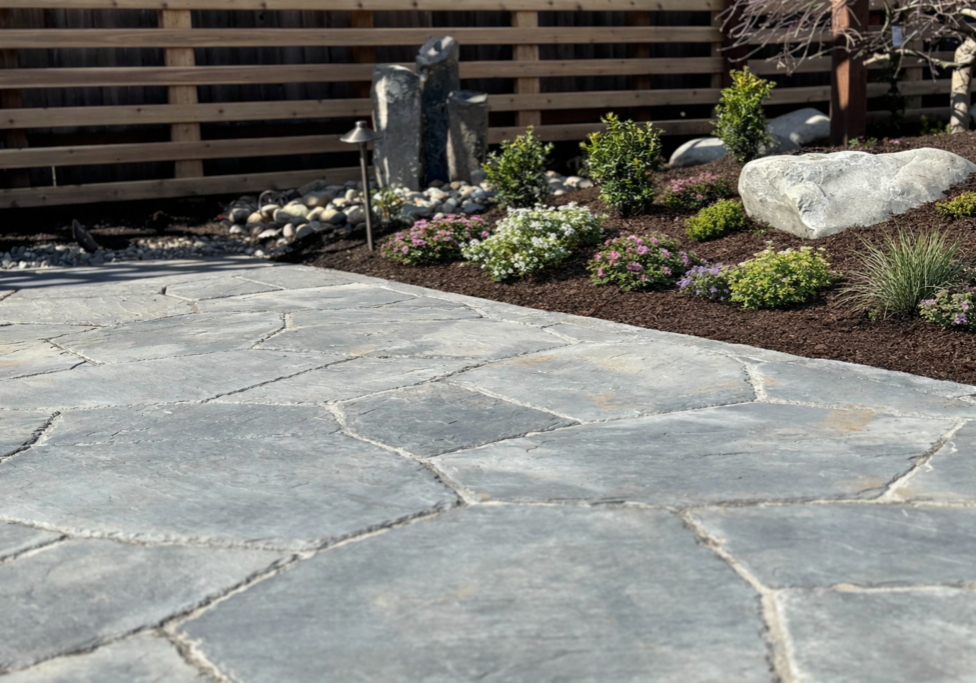
Do I Need a Permit for My Hardscaping Project in Whatcom County?
Yes, you do. Local authorities increasingly require permits in our region, regardless of how big your project is. Even if you’re only putting in a small walkway, it’s better to get that construction permit than to be faced with a stop-work order from your city. At North County Landscape Co., we handle the permit process…