
March 12, 2026 | Last Updated: July 16, 2026
Most landscape companies in Western Washington offer landscape bed maintenance. Unfortunately, not all companies truly focus on this specific service’s details.
The truth is flower bed maintenance is horticultural work. It requires knowing which plants are in the beds, when to feed them, when to cut them back, and when to leave them alone. It requires showing up consistently and noticing small issues that can be corrected before they expand.
The key is having a professional who’s trained specifically for the work. Mowing crews aren’t set up for this detailed and slower-paced work. Another key is having knowledge of plants that thrive in the Whatcom region, the most problematic weeds, and timing windows that separate a healthy bed from a messy one with struggling plants.
This post gives you an easy breakdown of the keys to real flower bed maintenance. You’ll see what’s included, how the service levels differ, and the task that’s a must in the beginning.
Table of Contents
Why People Request Landscape Bed Maintenance
Property owners who reach out to our company for bed maintenance usually fall into one of two camps. The first group tried another company, and the work simply wasn’t tidy, or the details got missed.
The second group tried handling the work themselves. But life got busy, and the beds grew beyond what a weekend afternoon could handle. Don’t worry, we understand!
In both cases, what property owners want is simple. You want reliability and a track record of keeping flower beds weed-free, tidy, and maintaining plant health. It’s not too much to ask to have a provider show up on schedule and leave your property looking much better than it looked before.
To get that result, all the details have to be covered. Getting rid of the weeds is the bare minimum. Other considerations include:
- The edging should be precise
- Mulch depth has to be on point
- Perennials need to be cut back at the correct time
What Professional Garden Bed Maintenance Includes
Most people assume flower bed maintenance means someone walks through and pulls up the weeds. That’s only the starting point. Here’s what a proper maintenance program should include:
Weed control is thorough hand-pulling combined with targeted spot treatment where needed. Every maintenance visit covers all your beds fully (or else weeds bounce right back).
Pre-emergent applications happen twice per season. The goal is stopping weeds before they break the surface. Once they’re up and growing, it’ll be an uphill battle.
Early plant feeding goes out in late February to early March, when liquid fertilizer absorbs most effectively into cool, moist soil. Many Whatcom County property owners skip this window or miss it altogether. Getting nutrients in early gives plants a stronger foundation.
Pruning and trimming depend on your service plan. A landscaping provider may offer reactive trimming, addressing what needs attention each visit. Usually, they also offer a proactive seasonal pruning schedule, so nothing gets overgrown.
Soil and plant health rounds out the work. This is horticultural maintenance that typical mowing crews aren’t trained on. Reading a plant, recognizing stress, knowing what a bed needs before problems develop takes training and experience.
This knowledge distinction matters especially for plants common to Whatcom County landscapes. Rhododendrons, hostas, and native shrubs like red flowering currant and vine maple all have specific timing and care requirements. For example, pruning a rhododendron at the wrong point in its cycle means you’re likely to lose next year’s blooms.
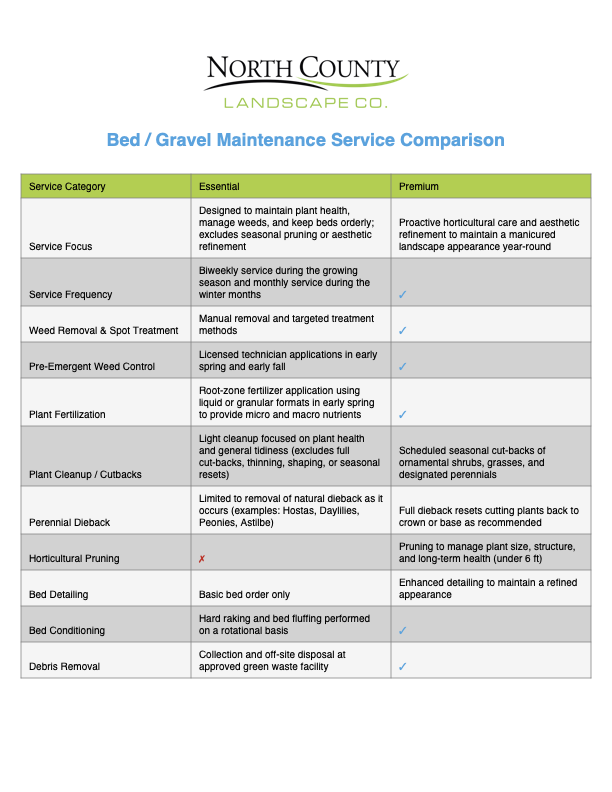
Two Levels of Flower Bed Service: Essential vs. Premium
At North County Landscape Co., we offer two tiers of flower bed maintenance, designed for different landscapes and different expectations.
The Essential Plan is the entry point for clients wanting clean, healthy beds without in-depth gardening commitment.
Every visit includes:
- Thorough weeding and spot treatment
- Two pre-emergent applications per season
- One early spring feeding
- Pruning is handled reactively (if we see dieback or overgrowth, we address it)
Our Essential Plan is a good fit for newer clients, simpler plantings, or anyone wanting professional results at a budget-friendly price.
The Premium Plan is our full fine-gardening service.
Everything in Essential is included, plus:
- One scheduled seasonal pruning and trimming program
- Cutback of ornamental grasses
- Proactive plant shaping throughout the season (staying ahead of what each plant needs)
Premium is for clients who want their beds to look polished year-round without having to even think about it.
Problem Plants and Why Horticulture Expertise Matters
Some plants in your beds are forgiving. Others cannot hold up to mistakes in timing or maintenance techniques. Western Washington landscapes tend to have a mix of both types.
Let’s start with hydrangeas. They’re one of the most mishandled plants in the Pacific Northwest. The most common mistake is pruning them at the wrong time. Depending on the variety, cutting back at the wrong point in the season eliminates next year’s buds entirely. The problem?
You won’t know until the following summer, when the plant leaves arrive as usual, but produce no blooms. Getting hydrangea maintenance right requires knowing which variety you have and when to avoid pruning.
Hydrangeas do well in the Pacific Northwest, thriving in our climate & native soil. ~WSU Extension
Next is moss, which is usually a hidden problem on shaded properties. It creeps into beds gradually, competes with plants for soil contact, and creates conditions where slugs and fungal issues thrive.
Treating moss isn’t complicated. The timing matters, though. Applying the wrong product at the wrong point in the season can damage landscaping bed plants you’re trying to protect.
Finally, native shrubs and perennials come with their own calendar. Red flowering currant blooms early and needs different maintenance than something like a hardy fuchsia or a sword fern.
Feeding windows, cutback timing, and dormancy cycles vary by plant. Managing a mixed bed for great plant health means expertise is needed.
This is the core problem with general lawn crews that attempt to handle bed work. A mowing tech is trained to keep turf clean and edges straight. That’s a real skill, and it’s not what we’re talking about here.
Reading a plant, catching early signs of stress, and knowing which stems to remove and which to leave are different skillsets. It’s why true bed maintenance is handled by professionals who specialize in landscape beds.
How Landscaping Bed Quality Gets Maintained
Proven systems are what keep landscapes healthy and vibrant. Landscape bed service is part of a comprehensive landscaping program, and it should be handled by a dedicated beds specialist. A mowing crew has too many other responsibilities to do a thorough job on bed maintenance.
Another benefit of hiring an experienced bed maintenance provider is having a full-time account manager. They will do regular on-site quality checks.
Some of their responsibilities include:
- Walking the property
- Checking on the quality of recent services
- Looking for any missed tasks by the crew
Some providers go even further by documenting work that’s completed on each property every day. North County uses Aspire, a professional platform that makes it easy to document service work with photos that are readily available to supervisors and our customers.
Clear reporting with pictures and easy sharing means a lot to homeowners and property managers. The result?
- Consistent visits
- Reliable results
- A real person to contact when you have a question
- No wondering about which services were completed or when
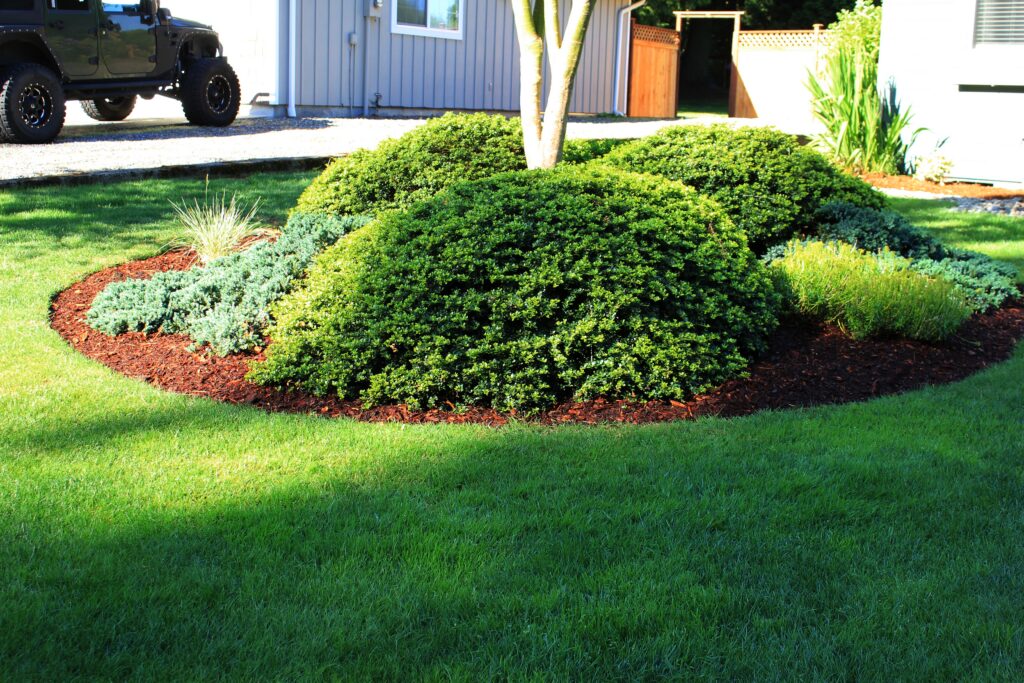
The Right Steps with Professional Bed Maintenance
If your flower beds haven’t been touched in a while, most providers will start with a spring cleanup to get everything to a clean baseline with the following tasks.
- Weeds pulled
- The right plants cut back at the right time
- Debris removed (e.g., twigs, leaves, old mulch)
After a thorough spring clean-up, you’re ready to get on a comprehensive maintenance plan that works the way it’s supposed to. The plans available will vary by provider. But as we noted, our company offers two levels of service — Essential or Premium, depending on your property goals.
From that point, we handle the scheduling, seasonal timing, and upkeep. You don’t have to think about it. Are you ready to get started before the spring rush hits? Request a free estimate, and we’ll do a site walkthrough and answer all your questions.
Pricing options are below.
North County Garden Beds Maintenance Pricing
- Programs start at $70 per service or $157/month with a 12-month contract. A typical 5,000-square-foot yard costs around $220/month.
- Contracts include bi-weekly visits from February–November
- Contracts include monthly December-February visits (storm debris, winter cutbacks, hard pruning)
- Price depends on the number of beds, plant density, and the condition of beds
- Price breaks available for already-clean beds.
- Annual mulch refresh is available as an add-on service.
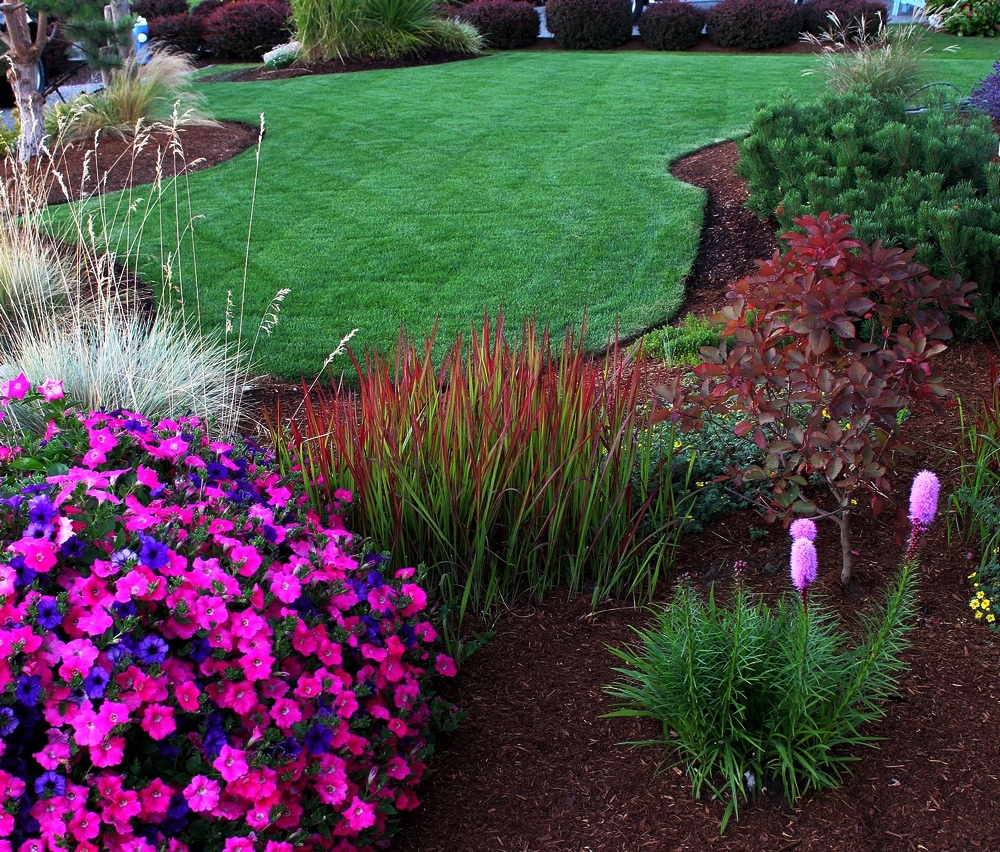
Ready for Beds That Look Professionally Cared For?
There’s a difference between beds that get weeded occasionally when a mowing team has spare time and beds actively managed by a horticultural specialist. Specialized bed maintenance gives you healthier plants, consistent season-to-season results, and stand-out curb appeal.
If you want your beds in good hands before the season gets away from you, now’s a good time to get on an experienced company’s schedule. Just be sure to find one that offers a dedicated service focused on landscape beds if that’s a priority for you.
Call us at 360-510-6890 for a free estimate. We’d love to talk through which service level fits you best.
Share with your followers:
Let's Talk About Your Beds
Tell us about your property and we’ll walk you through the right plan — free, no pressure.
Recent Posts
How Much Does Synthetic Turf Cost in Whatcom County?
Synthetic Turf Cost by Yard Size Here is what a finished synthetic turf lawn typically costs at North County’s starting range of $15 to $19 per square foot. Quotes vary with site conditions, but this gives you a starting point for budgeting. Lawn Size Typical Dimensions Installed Cost Range What It Fits 200 sq. ft.…
How Much Does a Paver Patio Cost in Whatcom County?
Paver Patio Cost by Size Patio Size Dimensions Typical Range What It Fits 150 sq. ft. 10 x 15 ft. $5,500 to $12,000 Bistro table and two chairs, or a grill station 200 sq. ft. 10 x 20 ft. $7,000 to $15,000 Small dining set, or a pair of loungers 300 sq. ft. 15 x…
Clover Lawns vs. Traditional Grass: Which Works Better in the Pacific Northwest?
Clover Lawn vs. Grass Lawn Comparison Chart Factor Micro-Clover Lawn Traditional Grass Lawn Mowing Every three to four weeks in peak season Weekly from spring through early fall Summer water Little once established Regular irrigation to hold color through August Winter look Thins out and can look sparse from December to February Stays green through…