
April 21, 2026 | Last Updated: July 16, 2026
If you’ve noticed your lawn looking a little rough around the edges lately, or you’ve simply grown tired of the weekly mowing routine, you’re not alone. Across Whatcom County, homeowners are asking the same question: is there a better way?
There is. And it’s been running on lawns in Bellingham, Lynden, Ferndale, and Fairhaven since 2019.
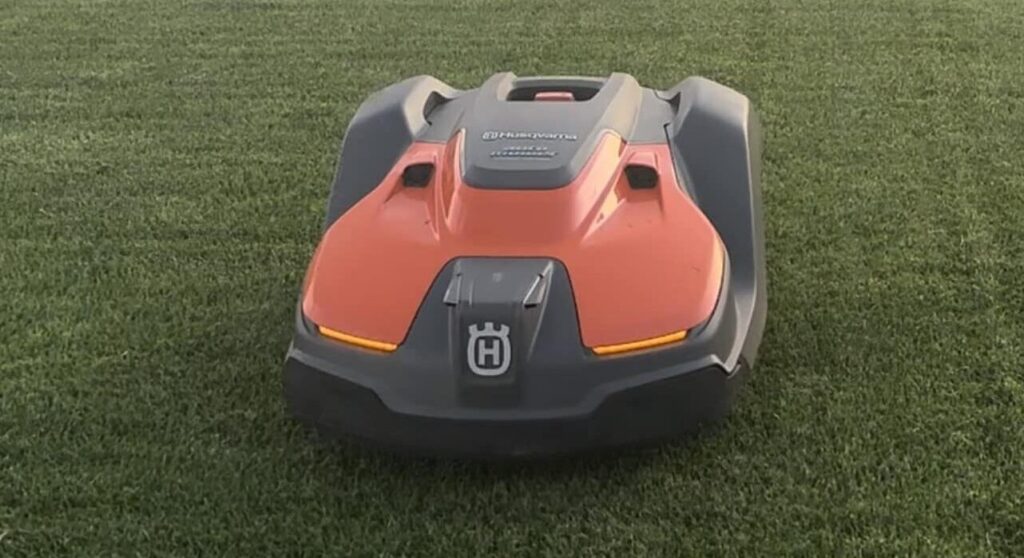
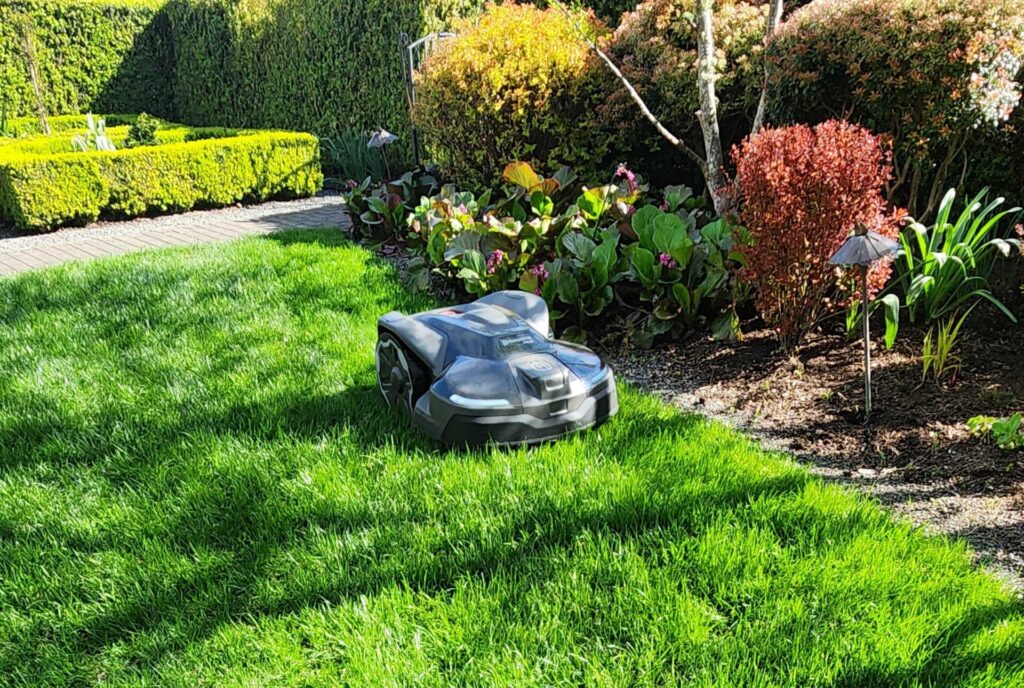
A robotic lawn mower, like the Husqvarna Automower we install and manage at North County Landscape, is a battery-powered, autonomous mower that cuts your grass on a programmed schedule without any manual effort. Unlike a push mower or riding mower, it operates quietly in the background, leaves no clippings behind, and actually improves your lawn’s health over time through frequent micro-cuts. We handle everything from setup to ongoing maintenance and winter storage, so you never have to think about it.
This isn’t a set-it-and-forget-it gadget you buy at Home Depot. It’s a managed service, and in this guide, we’ll walk you through exactly what that means: what your lawn needs to qualify, what the process looks like from day one, and what it costs compared to your other options.
Table of Contents
Is a Robotic Lawn Mower Right for Your Lawn?
Before anything else, the honest answer is: it depends on your yard. Here’s what we look at.
What makes a lawn a good candidate for robotic mowing?
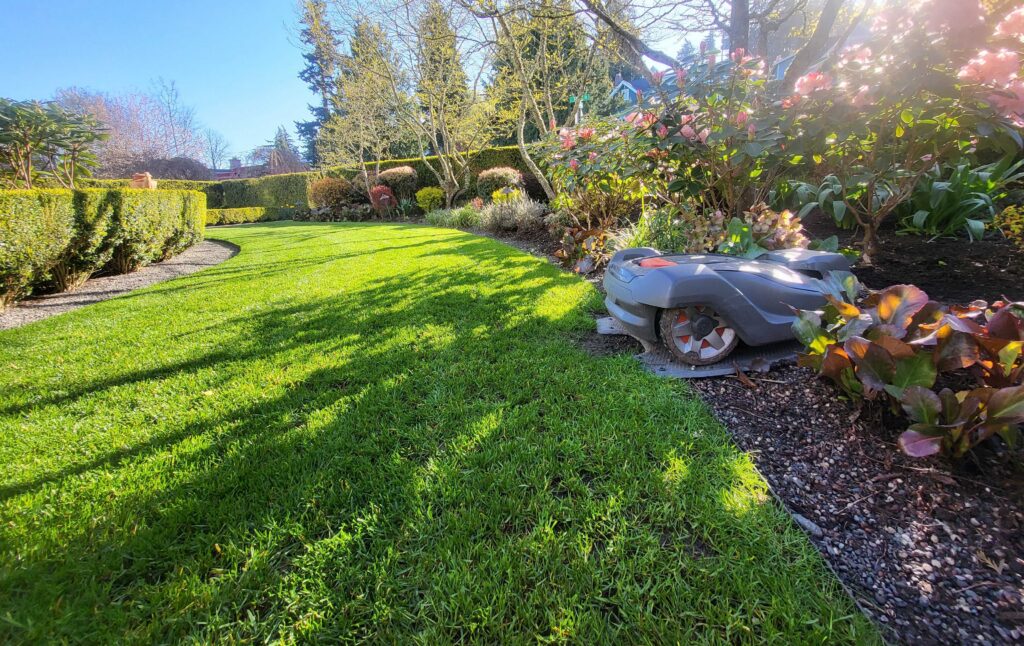
Shape and access is the single biggest factor. Our Automowers need to be able to reach every area of your lawn without obstruction. A property where one unit can flow freely through the entire lawn, front, sides, and back, is the ideal setup. Fences, gates, and sections that are cut off from each other require either multiple units or a creative solution.
Terrain matters, but less than you’d think. Most residential lawns in Whatcom County are perfectly suited. Even bumpier, less-manicured properties, what you might call “field grass that turned into a lawn over the years,” can be accommodated. We use units fitted with wider four-wheel-style tires for rougher ground. If you want to see one in action on truly rough terrain, ask us about our test unit running on Delta Ring Road!
Grass type and pets are not a concern. The mower stops immediately on contact with any obstacle: pets, toys, garden tools. It bumps and stops. That’s it. Rover might bark at it for the first few days, but every dog we’ve seen eventually reaches a peaceful coexistence with the robot.
Tree canopy is the one real variable in the Pacific Northwest. We’re lucky to live somewhere with beautiful, mature cedar trees. But dense canopy can interfere with GPS satellite connection. For most Whatcom County properties, our GPS units connect without issue. For properties with heavy overhead cover, we install traditional in-ground boundary wire instead. It’s a slightly different setup but works just as well. We’re also currently testing a new GPS model that is built to perform in heavy canopy situations. Technology in this space is moving fast!
What if my yard has a fence or separate sections?
No problem. It just means we may need more than one unit. We’ll determine that during the estimate. Some properties also have the option of installing a mower gate, essentially a pass-through that lets the unit move between zones on its own.
Does robotic mowing work in the Pacific Northwest rain?
Yes. And this is one of the most common questions we get, because it rains here. A lot.
The Husqvarna Automower is built to run in wet conditions. However, in early spring when Whatcom County lawns are fully saturated, we use programmable no-go zones to keep the unit off the soggiest sections until things firm up. It’s the same call a traditional mowing crew would make. Think of it like a Roomba: you tell it where not to go, and it simply doesn’t go there.
The result is that your lawn gets mowed consistently through the season without the ruts, skid marks, or compaction that can come from a heavy ride-on mower on wet turf.
For more on how smart lawn care works with PNW weather patterns, see our guide to smart irrigation in the Pacific Northwest.
What’s Included in North County Landscape’s Robotic Mowing Service
How is managed robotic mowing different from buying an Automower yourself?
Great question, and one we hear often, usually phrased as: “I’ve seen these at the local big box stores and mower shops. Why wouldn’t I just get one myself?”
You could. But here’s what you’d be taking on: the installation, the dialing-in period, the ongoing monitoring, the blade changes every four to six weeks, any repairs that come up, and winterizing the unit at the end of the season. You’d also be managing the mowing schedule yourself and troubleshooting whenever something goes wrong.
With North County Landscape, none of that is on you. Here’s what the process actually looks like:
Step 1: The Estimate We send someone out to assess your property. We’re looking at the size and shape of your lawn, whether it needs one unit or multiple, whether GPS or wire installation makes more sense, and whether there are any tricky areas the mowing crew may need to handle separately.
Step 2: Machine Preparation We prepare your unit before it ever touches your lawn. You’re not getting a machine pulled off a shelf and dropped in your yard.
Step 3: Installation Day Our Automower Production Manager handles the install. This is his full-time role at North County Landscape. Installing and maintaining robotic mowers is all he does. He sets everything up, runs the unit, and makes sure it’s performing before he leaves.
Step 4: The Dialing-In Period The first few weeks involve some fine-tuning. We check that the unit is hitting all areas, adjust boundaries where needed, and make sure it’s not getting stuck anywhere. This is normal, expected, and handled entirely by us.
Step 5: Ongoing Management Once the unit is dialed in, we monitor it remotely through software. We receive alerts if it stops unexpectedly. Every four to six weeks, we come out to install a fresh set of blades, included in your monthly rate. Any repairs or part replacements are covered too.
Step 6: Seasonal Winterization At the end of the season, we bring the units in and store them properly in our warehouse. This is a big reason our machines are lasting closer to five years instead of the three we originally projected. We maintain them the way a homeowner simply wouldn’t.
Do I need to be home during installation or maintenance visits?
No. We’ll walk you through everything on the first day if you’d like, but after that, our team handles visits independently.
Who manages the mowing schedule?
We do. Rather than handing clients the app and letting them adjust settings, we manage the schedule ourselves because we know what produces the best results. You can manually pause the unit anytime something’s going on in your yard by going up to the machine directly. Then it picks back up on its own.
Wondering if professional management is worth it across all your landscape services? See Is a Professional Landscape Company Worth It?
What to Expect in the First Few Weeks of Robotic Mowing
Is there a learning curve with a robotic lawn mower?
Yes, and we think it’s important to be upfront about this.
In the first few weeks, the unit is learning your lawn. There may be a spot near a flower bed where the boundary needs a small adjustment. There may be a low spot where the unit wants to get stuck, in which case we’ll make a minor alteration to level it out. These are normal, expected parts of the dialing-in process.
This is also exactly why our managed service makes more sense than DIY. We catch and fix these things. You shouldn’t have to troubleshoot your lawn mower.
Will I still need lawn edging and trimming with a robotic mower?
Yes. The Automower will come very close to your lawn’s edge, but it can’t go over it without falling off. If left unedged, you’d see a small fringe along borders and beds. We call it “chap,” the leftover fringe that builds up when cuts aren’t perfectly clean.
That’s why edging and trimming remains part of the service. Your crew still comes out on a regular schedule to handle that detail work. The Automower handles everything in between.
Does Robotic Mowing Actually Improve Your Lawn Over Time?
This is where robotic mowing separates itself from every other option.
Traditional mowing works on a weekly or bi-weekly cycle. Grass grows, gets tall, gets cut back down hard. Repeat. That cycle is tough on turf. It directs the plant’s energy upward into re-growing blade height rather than downward into root development.
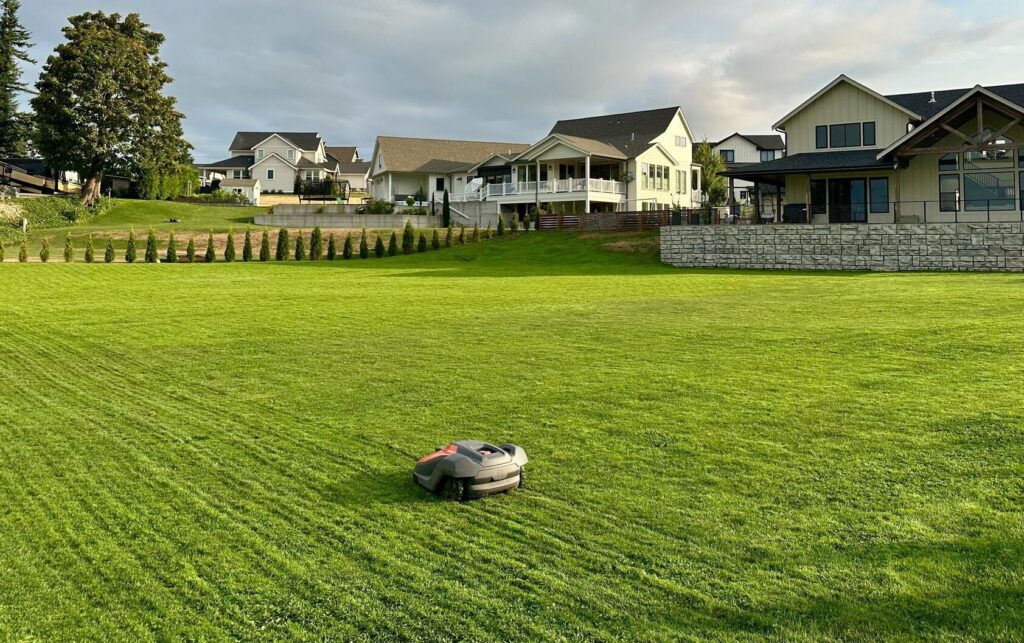
Robotic mowing flips that entirely. Because the unit typically runs daily or as little as three times a week, it’s only ever cutting a tiny amount. Micro-cuts the lawn barely notices. That consistency tells the grass to put energy into the roots instead of racing to grow tall. Over time, the result is measurable: thicker, denser turf that’s more resilient, needs fewer chemical treatments, and requires less water to stay healthy.
No clippings left behind either. Because the cuts are so small, the trimmings break down immediately into the soil, acting almost like a light top-dressing. What we sometimes call “chap” with a traditional mower, those leftover grass bits that collect on the surface after a heavy cut, simply doesn’t happen with a robotic mower. There’s nothing to blow down, nothing to bag.
Zero emissions, too. These units run on battery. No fuel, no exhaust, no carbon footprint. And ultra quiet.
One of our clients, a Bellingham homeowner who had been meticulous about her lawn for years and held us to the highest standard, converted to the Automower program and noticed the difference within a few months. The evenness of the cut, the absence of any clippings, the fact that she almost never needed to call us anymore. Her lawn just ran. (Testimonial quote coming — reach out to client before publishing.)
On the topic of reducing lawn inputs over time, see our post on how to stop weeds without over-relying on chemicals.
How Much Does Robotic Lawn Mowing Cost in Whatcom County?
How does the cost of robotic mowing compare to traditional lawn mowing?
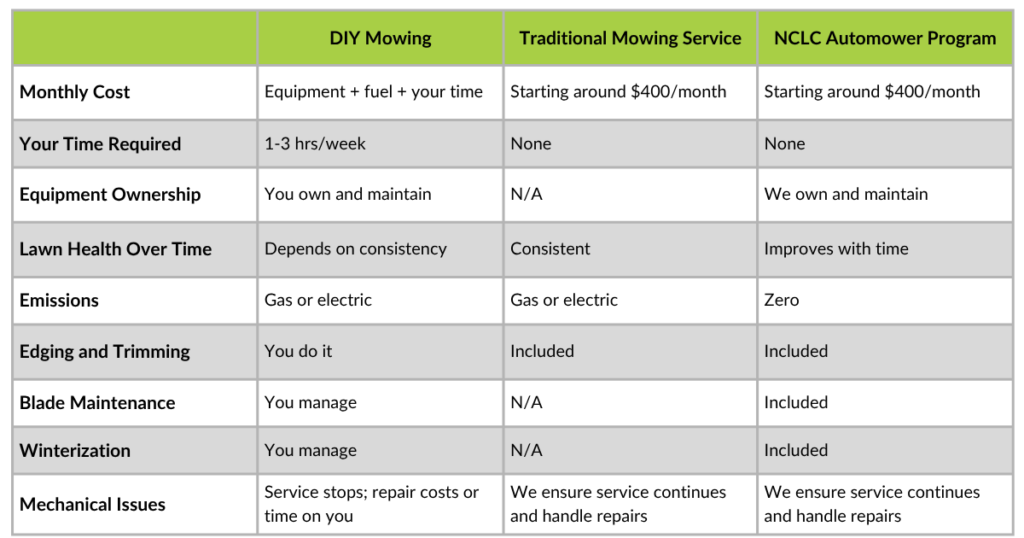
What is included in the monthly robotic mowing rate?
Everything you’d expect to handle yourself if you owned the unit, and then some:
- Blade replacement every 4-6 weeks (brand new blades every time, not sharpened)
- Remote software monitoring with alerts
- Regular quality inspections
- Parts and repairs as needed
- Edging and trimming visits
- Seasonal winterization and warehouse storage
One number. No surprises.
For a deeper breakdown of how professional lawn service pricing compares to DIY across the board, see Lawn Service Pricing: DIY vs. Professional.
Frequently Asked Questions About Robotic Lawn Mowing
Will a robotic lawn mower run over my dog or kids? No. Husqvarna Automowers are equipped with sensors that stop the unit immediately on contact with any obstacle. It bumps gently and stops. It does not run anything over. Pets typically ignore it after the first few curious encounters.
Can someone steal a robotic lawn mower? Automowers have built-in GPS tracking, which makes theft both difficult and traceable. The unit also requires a PIN to operate, so it’s essentially useless to anyone who takes it.
How often does a robotic mower need maintenance? Blades are replaced every four to six weeks with brand-new sets, included in your monthly rate. Most homeowners who own their own units stretch this much longer than they should, which degrades cut quality over time. We don’t. The unit is also professionally winterized and stored in our warehouse each season, which is why our machines are averaging closer to five years of life.
Does robotic mowing work on slopes or uneven terrain? Yes. For bumpier or more uneven properties, we use units fitted with wider tires designed for more difficult ground. Most residential lawns across Whatcom County, including in hillier neighborhoods around Lake Whatcom and Chuckanut, are well within range.
What happens if the mower gets stuck? Our team monitors all units through software and receives automatic alerts if a unit stops unexpectedly. We handle it. You don’t have to do anything.
Do I need to do anything to maintain the mower myself? No. Monitoring, blade changes, repairs, quality checks, and seasonal storage are all handled by our Automower Production Manager. That’s what the monthly rate covers.
Is Robotic Lawn Mowing Right for You?
This is for you if:
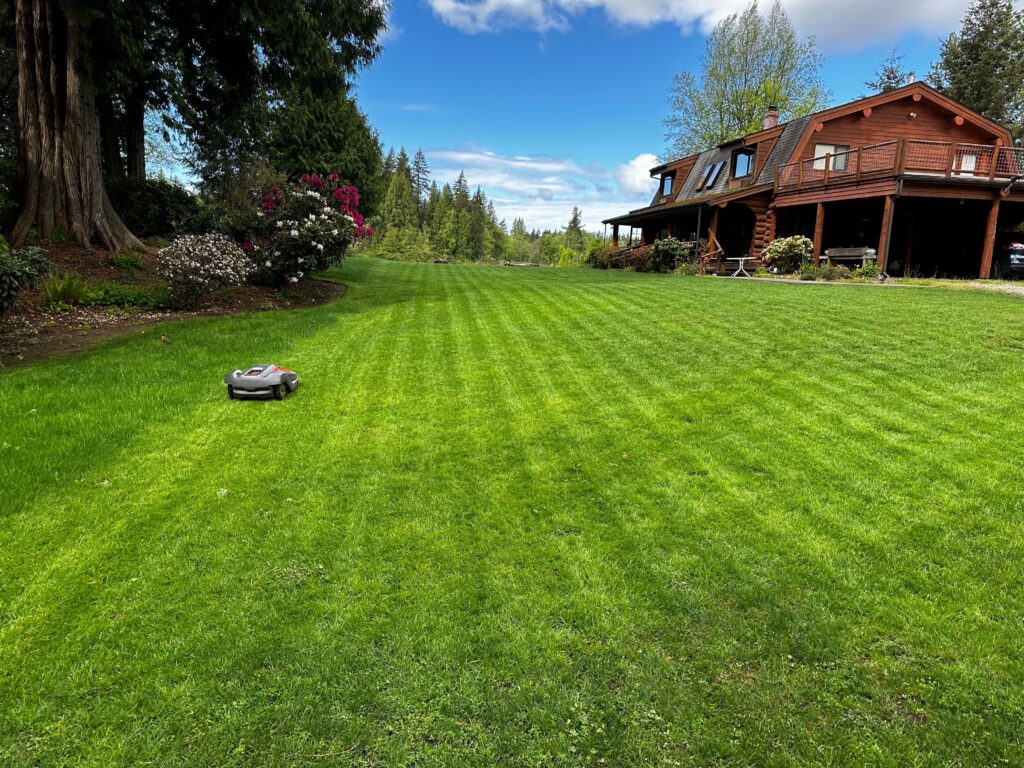
- You want a fresh-cut, perfectly striped lawn without scheduling a crew around your life
- You value a quiet yard with no engine noise and no crew disruption on Saturday mornings
- You care about an eco-friendly option: zero emissions, fewer chemicals, less water over time
- You want to be on the cutting edge of lawn care without tinkering with the technology yourself
- You’d rather pay for expertise than spend your weekends maintaining equipment
This is not for you if:
- You genuinely love mowing your own lawn, and that’s completely valid. These aren’t your clients anyway.
- Your property has significant access limitations that prevent full coverage. We’ll tell you that honestly at the estimate.
- You’re looking for the lowest possible price point. This is a premium, managed service. It’s priced accordingly.
Ready to See One Running on a Lawn Like Yours?
North County Landscape has been installing and managing Husqvarna Automowers with our robotic mowing services across Whatcom County since 2019. Our Automower Production Manager will assess your property, walk you through everything, and give you an honest answer on whether your lawn is a good fit. No pressure, no commitment.

Or call us at 360-510-6890. We serve homeowners across Bellingham, Lynden, Ferndale, Birch Bay, Fairhaven, and the surrounding Whatcom County area.
Related reading:
- Lawn Service Pricing: DIY vs. Professional
- Smart Irrigation in the Pacific Northwest
- Is a Professional Landscape Company Worth It?
- Synthetic Turf: Pros and Cons
Share with your followers:
Recent Posts
How Much Does a Paver Patio Cost in Whatcom County?
Paver Patio Cost by Size Patio Size Dimensions Typical Range What It Fits 150 sq. ft. 10 x 15 ft. $5,500 to $12,000 Bistro table and two chairs, or a grill station 200 sq. ft. 10 x 20 ft. $7,000 to $15,000 Small dining set, or a pair of loungers 300 sq. ft. 15 x…
Clover Lawns vs. Traditional Grass: Which Works Better in the Pacific Northwest?
Clover Lawn vs. Grass Lawn Comparison Chart Factor Micro-Clover Lawn Traditional Grass Lawn Mowing Every three to four weeks in peak season Weekly from spring through early fall Summer water Little once established Regular irrigation to hold color through August Winter look Thins out and can look sparse from December to February Stays green through…
Fire Pits, Water Features, & Rock Gardens: How to Add Year-Round Interest to Your Backyard
Designing for Four Seasons in the PNW Year-round landscape design comes down to layering features that catch your attention at different times: Something with structure to add interest during the winter Something that pulls you outside on cool evenings, and Something that moves and makes sound when the garden is still. Stone, fire, and water…