
Blog Post
How to Fix Drainage Problems in Whatcom County
February 9, 2026
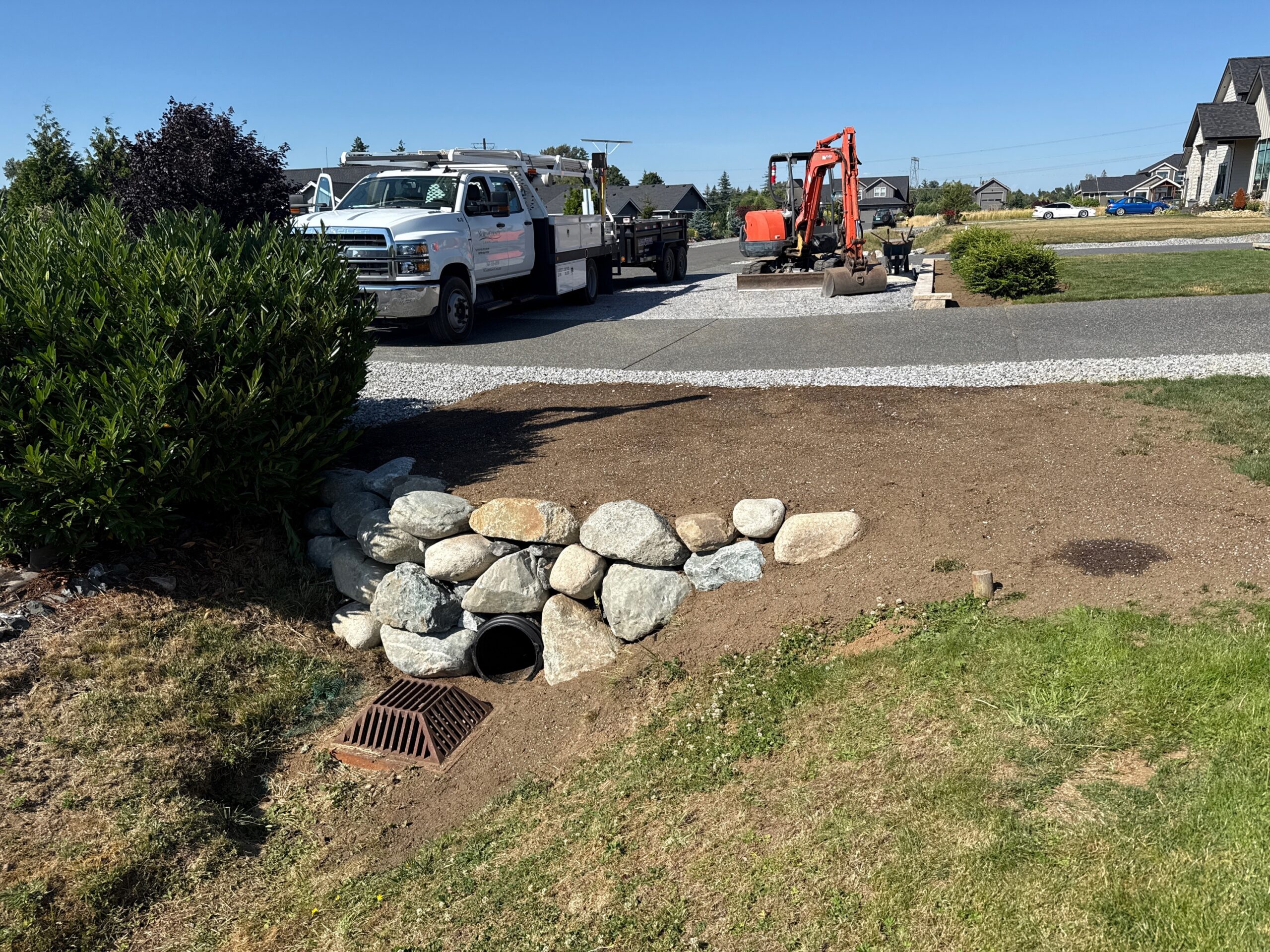
Living in Whatcom County means rain is part of the deal. What many homeowners don’t expect is how often that rain turns into persistent landscape and property problems—standing water, struggling lawns, moss takeover, and even moisture near foundations.
Across Bellingham, Ferndale, and surrounding communities, drainage issues are becoming more common. And while homeowners often say, “This never used to be a problem,” there are clear reasons why it is now.
This guide explains what’s changed, how to recognize a true drainage issue, and which solutions actually work long-term in the Pacific Northwest.
Why Drainage Problems Are Increasing in Whatcom County
Whatcom County averages 35–42 inches of rainfall per year, with roughly 82% of that rain falling between November and April. Historically, rainfall arrived more steadily in smaller amounts. Today, it’s increasingly delivered in heavier, more intense downpours, often one to two inches in a single day.
That shift matters because much of our region sits on clay-based soil. Clay drains slowly. When heavy rain arrives faster than the soil can absorb it, water has nowhere to go. Instead of moving through the soil profile, it lingers near the surface or flows toward structures.
The result isn’t just wet grass. Over time, excess moisture leads to compacted soil, moss dominance, declining turf, stressed plants, erosion, and water collecting near foundations or entering crawl spaces. Drainage problems are no longer isolated or rare; they’re structural to how our climate and soils interact.
Areas Most Affected by Drainage Issues
Certain neighborhoods and areas in Whatcom County experience more persistent drainage challenges due to soil composition, topography, and development patterns.
Bellingham’s North and Northwest neighborhoods including areas around Lake Padden, Columbia, and Birchwood often deal with heavy clay soils and minimal natural slope. Water tends to pool in low-lying yards, particularly after heavy rain events.
South Bellingham and Fairhaven properties built on hillsides frequently experience runoff from upslope areas. Water flows downhill and accumulates at the base of slopes or against foundation walls.
Ferndale and Lynden sit on former floodplain areas with naturally high water tables. Even moderate rainfall can saturate the soil quickly, creating persistent wet conditions in lawns and landscape beds.
Sudden Valley and Geneva properties face unique challenges due to steep terrain and forested surroundings. Runoff from uphill properties and roads often concentrates in predictable drainage paths that overwhelm unprepared landscapes.
If your property is in one of these areas and you’re experiencing persistent moisture issues, drainage solutions designed for local soil and terrain conditions will be essential.
How to Tell If You Have a Real Drainage Problem
It’s normal for landscapes to feel wet immediately after rain. Drainage problems reveal themselves when moisture doesn’t resolve.
Homeowners with drainage issues often notice that their lawn never fully dries out, even during breaks in the weather. Turf may feel spongy underfoot or remain muddy days after rainfall. Moss tends to spread aggressively, while plants struggle or decline due to prolonged root saturation. In more serious cases, water consistently collects near foundations or creates damp, musty conditions in crawl spaces.
If these conditions persist year after year, the issue isn’t seasonal; it’s structural.
Drainage Solutions Homeowners Commonly Hear About (And What They Actually Mean)
Drainage conversations are often confusing because the terminology isn’t intuitive. A few core concepts come up repeatedly:
| Term | What It Means | Why It’s Used |
| French Drain | Perforated pipe surrounded by gravel | Captures subsurface water |
| Tight Line | Solid pipe | Moves downspout water away from structures |
| Regrading | Adjusting slope | Redirects water flow |
| Dry Creek Bed | Decorative surface drainage | Manages visible runoff |
| Culvert Drain | Large-scale conveyance | Handles high water volume |
Understanding these terms helps homeowners avoid mismatched or ineffective solutions.
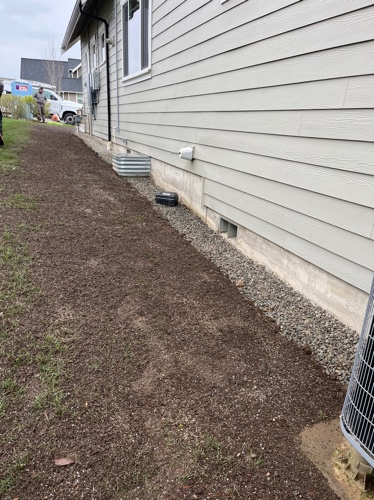
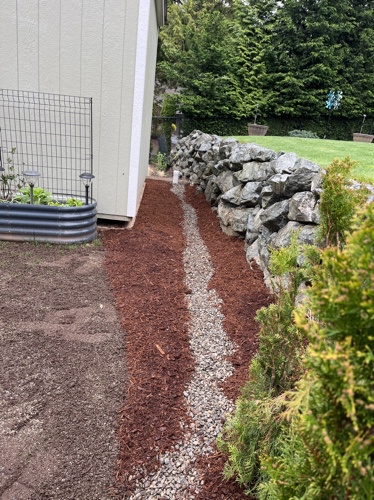
French Drains: When Small Systems Work—and When Larger Ones Are Needed
French drains are one of the most reliable drainage solutions in the Pacific Northwest, but their design depends entirely on the problem being solved.
Smaller systems are often enough to dry out lawns, protect patios, or relieve saturated garden beds. Larger installations are used to intercept water before it reaches the home, particularly on sloped properties or where runoff originates uphill.
When properly designed, French drains improve soil conditions, protect plant roots from prolonged saturation, reduce crawl space moisture, and support long-term property value. The key is correct sizing, grading, and material selection, not simply installing pipe in the ground.
Sump Pumps vs. Fixing the Drainage Problem
We’ve heard that homeowners are told they need a sump pump when water shows up in a crawl space. In reality, a sump pump addresses the result, not the cause.
Sump pumps remove water after it has already entered the structure. They rely on mechanical systems, require maintenance, and continue operating indefinitely because the source of the water remains unchanged.
Drainage solutions, such as French drains, tight lines, and regrading, work differently. They prevent water from reaching the structure in the first place. For many homes, that approach is more reliable, less stressful, and more protective over time.
Drainage fixes the problem at its source. Sump pumps manage the aftermath.
DIY Drainage and Other “Quick Fix” Alternatives
Some homeowners attempt drainage solutions on their own, with good intentions. Unfortunately, many DIY systems fail within a year.
The most common issues include using soft corrugated pipe that collapses over time, setting grade by eye instead of using laser-guided leveling, digging trenches that are too shallow, or burying drains under soil or grass. Once soil seals the surface, water can no longer enter the system and it stops functioning.
DIY approaches may help temporarily redirect surface water or extend downspouts, but persistent pooling, saturated lawns, crawl space moisture, or HOA-managed properties typically require professional design and installation.
If you’re weighing that decision, read about the long-term value of hiring a professional landscape company.
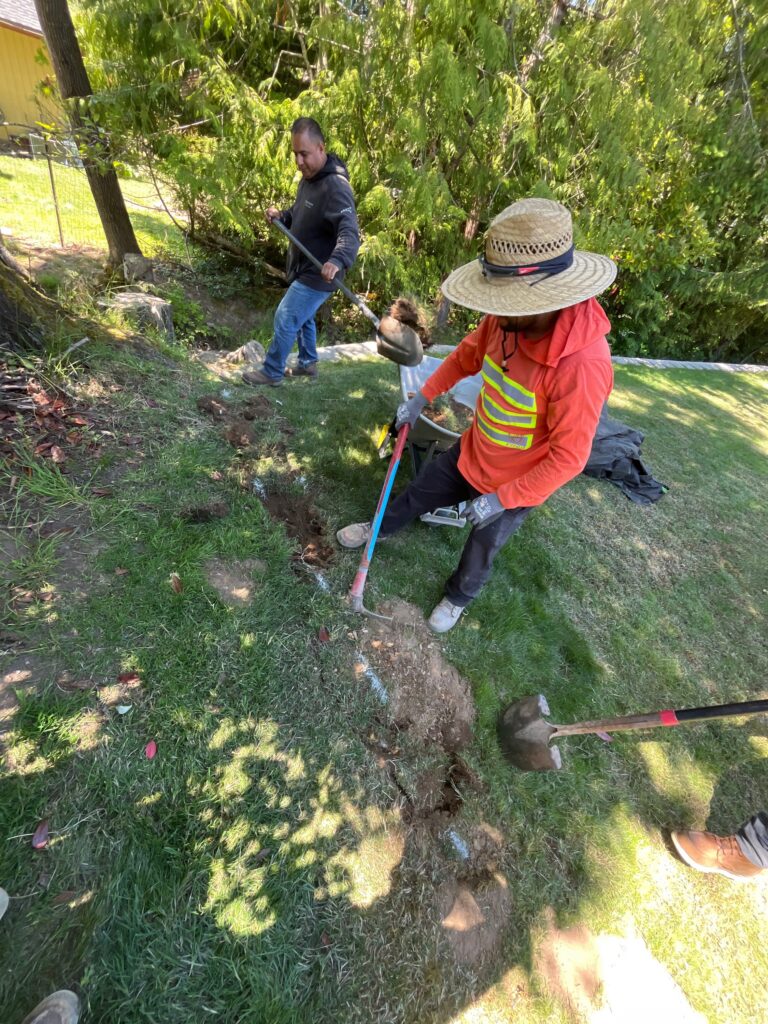
How Drainage Is Installed, Integrated, and Discharged Properly
Professional drainage work does not need to destroy an established landscape.
Effective systems are built with laser-guided grading to ensure consistent flow, correct pipe selection and depth, and permeable gravel brought to the surface, not buried under soil. Visually, drains are often integrated into existing river rock or dry creek beds so they function without drawing attention.
Equally important is where the water goes. Discharge is planned carefully, often into approved storm drainage systems, while avoiding impacts on neighbors or municipal violations. Dry wells may be considered in limited cases, but in our experience, they rarely provide a meaningful irrigation supply later in the year.
Permits, HOAs, Cleanup, and Documentation
Most residential French drains in Whatcom County do not require land disturbance permits, but discharge locations sometimes do. Professional planning accounts for this upfront.
City of Bellingham properties may require stormwater management plan approval if drainage discharge connects to the municipal storm system or affects neighboring properties. The City’s Planning and Community Development Department oversees these reviews.
Unincorporated Whatcom County properties fall under the jurisdiction of Whatcom County Planning and Development Services. While basic yard drainage typically doesn’t trigger permit requirements, larger systems or those affecting critical areas may require review.
Ferndale, Lynden, Blaine, and other incorporated areas each have their own planning departments with specific stormwater requirements. A professional drainage contractor will confirm local regulations before installation begins.
Utility locates are completed before any digging begins. When HOAs or architectural committees are involved, plans are prepared and submitted for approval. After installation, sites are cleaned and restored, and drainage work is documented in North County Landscape Co’s customer portal so homeowners and HOAs can reference it years later.
That level of documentation provides clarity, accountability, and peace of mind.
Why Proper Drainage Protects Your Landscape Long-Term
Drainage is foundational. Without it, even excellent lawn care and soil programs struggle to succeed.
Excess moisture affects soil structure, nutrient availability, turf performance, and plant health. In some cases, soil amendments such as lime can help rebalance conditions once drainage issues are resolved. Find out more in our article on lime soil amendments in the Pacific Northwest.
Addressing drainage correctly protects your landscape, your home, and your long-term investment.
Frequently Asked Questions About Yard Drainage
How do I know if my issue is drainage or just seasonal rain?
Seasonal rain causes temporary wetness that resolves within a day or two after rainfall stops. True drainage problems persist, lawns remain spongy, puddles stay visible for days, and moss continues spreading even during dry breaks in the weather. If these conditions return year after year in the same locations, the issue is structural, not seasonal.
Will drainage work damage existing plants or trees?
Professional drainage installation is carefully planned to avoid root zones and minimize disruption. Trenches are typically narrow, and systems can be routed around established plantings. In most cases, improving drainage actually benefits plant health by reducing prolonged root saturation, which stresses or kills many landscape plants over time.
How long should a properly installed French drain last?
A well-designed French drain using rigid perforated pipe, proper grading, and quality gravel should function effectively for 20–30 years or longer. Systems that fail prematurely usually suffer from poor design, incorrect slope, buried gravel, or use of soft corrugated pipe that collapses under soil pressure.
Can poor drainage cause moss and lawn decline?
Yes. Moss thrives in persistently moist, compacted soil conditions where turf struggles to establish deep roots. Poor drainage keeps soil saturated, reduces oxygen availability, and creates the exact environment moss prefers. Fixing drainage is often the most important step in restoring a healthy lawn.
Is standing water harmful to plants?
Most landscape plants cannot tolerate prolonged root saturation. Standing water displaces oxygen in the soil, suffocates roots, and leads to root rot, fungal disease, and plant decline. Even water-tolerant species perform better with adequate drainage.
Do all drainage projects require permits?
Most basic residential French drains do not require permits in Whatcom County. However, systems that discharge into municipal storm systems, affect neighboring properties, or involve significant grading may require approval from the City of Bellingham, Whatcom County Planning, or your local municipality. Professional contractors verify requirements before starting work.
Are sump pumps always necessary?
No. Sump pumps are often installed as a reaction to water in crawl spaces, but they address the symptom rather than the cause. Many homes benefit more from exterior drainage solutions, French drains, regrading, and tight lines, that prevent water from reaching the foundation in the first place. Sump pumps may still be useful as a backup, but they shouldn’t be the primary solution.
Why can’t French drains be covered with grass?
French drains rely on gravel at the surface to allow water to enter the system. Covering the gravel with soil and grass blocks water from reaching the perforated pipe below. Once sealed, the system stops functioning. Properly designed drains use attractive river rock or are integrated into decorative dry creek beds that remain permeable.
Does improving drainage really help lawn health?
Yes. Drainage is foundational to turf health. Without it, soil remains compacted and saturated, roots struggle to establish, and moss takes over. Even the best fertilization and aeration programs will underperform in poorly drained soil. Fixing drainage first creates the conditions where turf can thrive.
What’s the first step in evaluating a drainage issue?
Schedule a site evaluation with a professional drainage contractor. They’ll assess soil conditions, identify water sources, observe existing flow patterns, and recommend solutions tailored to your property. North County Landscape Co provides detailed drainage consultations that include documentation, planning, and transparent next steps.
Ready to Fix Your Drainage Problem?
If you’re dealing with persistent standing water, saturated lawns, or moisture near your foundation, the best time to act is before the next heavy rain arrives.
North County Landscape Co provides professional drainage design and installation throughout Whatcom County, including Bellingham, Ferndale, Lynden, Blaine, and surrounding areas. Our systems are laser-graded, properly permitted, and built to last decades.
Schedule a drainage consultation today and get a clear plan to protect your property, restore your landscape, and eliminate drainage problems for good.
Share with your followers:
Spring Flower Bed Maintenance: A Western Washington Guide
Summary: Spring flower bed maintenance in Western Washington means tackling weeds early, refreshing mulch, cutting back winter-damaged plants, and preparing soil before our growing season hits full stride, while staying ahead of slugs. Spring arrives in Western Washington with a mix of promise and urgency. The first warm days reveal what winter left behind: beds…
The 16 Best Whatcom County Native Plants to Add to Your Landscaping This Spring
Spring in Whatcom County means it’s time to think about your garden or landscape. If you want plants that actually thrive here without constant babysitting, native species belong at the top of your list. Plants native to the Pacific Northwest have spent thousands of years adapting to our wet winters, dry summers, and the occasional…
What to Look for in Spring Cleanup Services
The first warm days of spring in the Pacific Northwest can feel like a long-awaited exhale. Snow recedes, mossy layers thin out, and buried beneath months of fallen leaves and debris, your lawn starts sending up new growth. That’s the signal: it’s time for a spring cleanup. But who you hire for the job matters…
Mulch vs Bark: What’s the Best Ground Cover for Whatcom County Gardens?
For Whatcom County gardens, processed mulches (medium fir and black composted) outperform bark and cedar chips in moisture retention, weed control, and soil health by working with our wet winters and dry summers instead of against them. Walk through any garden center in Whatcom County, and you’ll face rows of bags labeled mulch, bark, and…
Synthetic Turf: Pros, Cons, and How to Decide If It’s Right for Your Yard
Synthetic turf has come a long way over the last decade. Today’s products look more natural, drain better, and hold up far longer than the stiff, plastic grass many homeowners still picture. That said, it is not the right fit for every property, lifestyle, or budget. If you are weighing synthetic turf against a natural…